 Pin It
 There's something about assembling a Buddha bowl that makes you feel like you're building something intentional. I discovered this particular combination on a Tuesday afternoon when my fridge was overflowing with vegetables that needed rescuing, and I found myself arranging them on a sheet pan almost without thinking. The green goddess dressing came together on a whim, a way to use up herbs before they wilted, and it transformed everything beneath it into something that tasted both comforting and alive.
I brought these bowls to a potluck last spring, and I watched people who swore they weren't eating plant-based that week come back for seconds. One friend asked if the dressing had dairy in it because it was too silky, and when I said no, she looked genuinely amazed. That's when I realized this wasn't just food I was making for myself anymore—it had become something I wanted to share.
Ingredients
- Sweet potato: It sweetens and softens beautifully in the oven, adding earthiness and a natural creaminess to the bowl when it caramelizes at the edges.
- Broccoli florets: These get wonderfully crispy and charred if you spread them out on the pan, giving you texture contrast against the softer grains.
- Red bell pepper: Adds brightness and sweetness that balances the smokiness from the paprika.
- Zucchini: Becomes tender and mild, acting as a neutral base that lets other flavors shine.
- Smoked paprika and cumin: These spices do the heavy lifting for flavor, making everything taste intentional rather than plain.
- Quinoa: Rinsing it first removes the bitter coating, and cooking it in vegetable broth instead of water makes it taste like you care.
- Chickpeas: They provide protein and a satisfying firmness, especially if you warm them slightly so they're not cold against the hot roasted vegetables.
- Ripe avocado: This is the base of your dressing, and it needs to be perfectly ripe—soft enough to blend but not yet brown inside.
- Fresh herbs (parsley, cilantro, basil): These herbs are what make the dressing taste alive, so use them generously and don't skip any of them.
- Lemon juice: It keeps the dressing bright and prevents the avocado from turning brown too quickly.
- Pumpkin seeds: Toasted and scattered on top, they add a satisfying crunch and a subtle nuttiness that ties everything together.
- Red cabbage: Raw and shredded, it provides a peppery crunch and visual drama against the softer components.
Tired of Takeout? 🥡
Get 10 meals you can make faster than delivery arrives. Seriously.
One email. No spam. Unsubscribe anytime.
Instructions
- Get your oven ready and prep your vegetables:
- Heat your oven to 425°F and line a baking sheet with parchment paper so cleanup becomes effortless. While it preheats, peel and dice your sweet potato into roughly half-inch pieces, cut your broccoli into florets, slice your bell pepper and zucchini, and try to keep everything roughly the same size so everything roasts evenly.
- Season and spread:
- Toss all your chopped vegetables in a large bowl with the olive oil, smoked paprika, cumin, salt, and pepper, making sure every piece gets coated. Spread them out on your baking sheet in a single layer without crowding, because if they're piled on top of each other they'll steam instead of roast.
- Roast until golden:
- Pop them in the oven for 25 to 30 minutes, flipping them halfway through, until the edges are caramelized and everything is tender when you pierce it with a fork. The sweet potato should be the most golden piece on the pan.
- Cook your quinoa:
- While the vegetables are roasting, rinse your quinoa under cold water, then combine it with 2 cups of water or vegetable broth in a saucepan. Bring it to a boil, then lower the heat, cover it, and let it simmer gently for about 15 minutes until all the liquid is absorbed and you see those little spiral tails pop out.
- Make the green goddess dressing:
- In a blender or food processor, combine your ripe avocado, fresh parsley, cilantro, basil, lemon juice, one garlic clove, olive oil, 2 tablespoons of water, salt, and pepper, and blend until it's completely smooth and creamy. Add more water a little at a time if it's too thick—you want it pourable but still substantial.
- Warm your chickpeas:
- If you like them warm against the hot roasted vegetables, toss them in a skillet over medium heat for just a couple of minutes, stirring occasionally so they warm through without getting too soft.
- Assemble and serve:
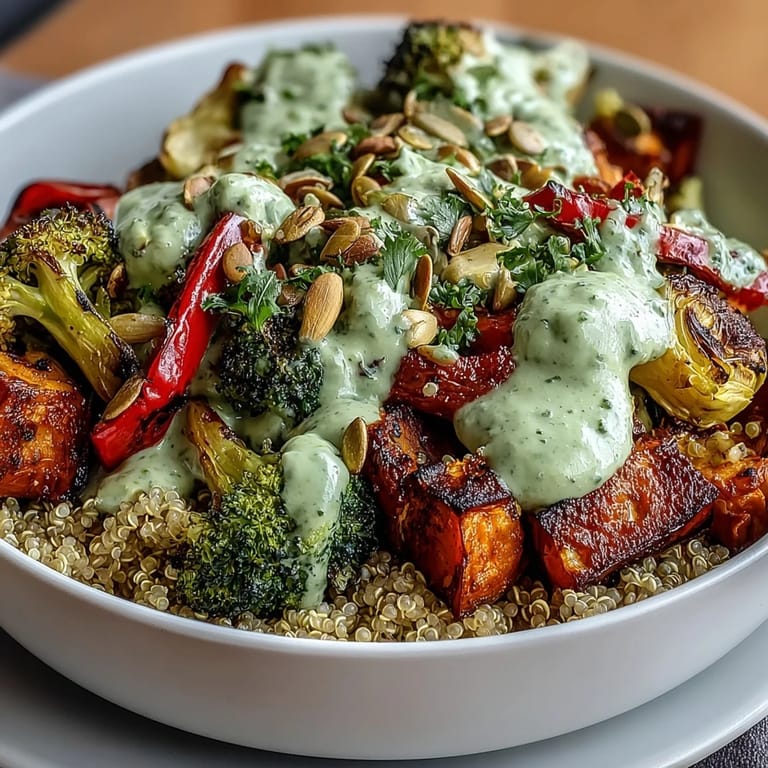
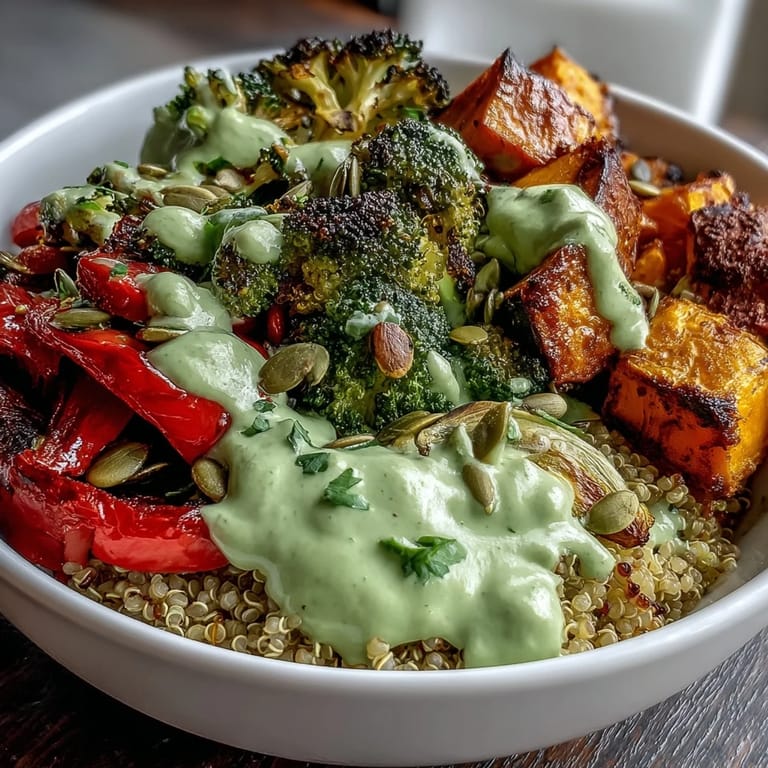
- Divide your cooked quinoa among four bowls, then arrange the roasted vegetables, warm chickpeas, shredded red cabbage, and toasted pumpkin seeds on top. Drizzle generously with the green goddess dressing and serve with lemon wedges on the side so people can add brightness if they want.
 Pin It
 A friend who usually eats meat came to dinner unexpectedly one evening, and I made these bowls without announcing anything special about them. He ate two, which told me everything. After that, I stopped thinking of them as vegan bowls and just thought of them as bowls that happened to be vegan, which is when I knew the recipe had become something real.
Why Roasting Changes Everything
Raw vegetables are fine, but roasted vegetables are a different animal entirely. When you roast at high heat, the natural sugars in the vegetables caramelize and concentrate, creating these deep, complex flavors that feel almost savory. The broccoli goes crispy and charred on the edges, the sweet potato becomes candy-like, and the bell pepper softens into something almost silky. It's the difference between a salad and a meal, and it's why I rarely make this bowl any other way anymore.
The Green Goddess Dressing Is Actually Genius
I used to think creamy dressings required dairy or mayonnaise until I understood what an avocado could do when blended with herbs and lemon juice. It's smooth and luxurious but still feels light, and the herbs keep it from feeling heavy even though it coats everything beautifully. This dressing works on grain bowls, roasted vegetables, wraps, or even as a dip for bread, and once you've made it once, you'll find yourself making it for things that have nothing to do with Buddha bowls.
Building Your Bowl Is Actually the Fun Part
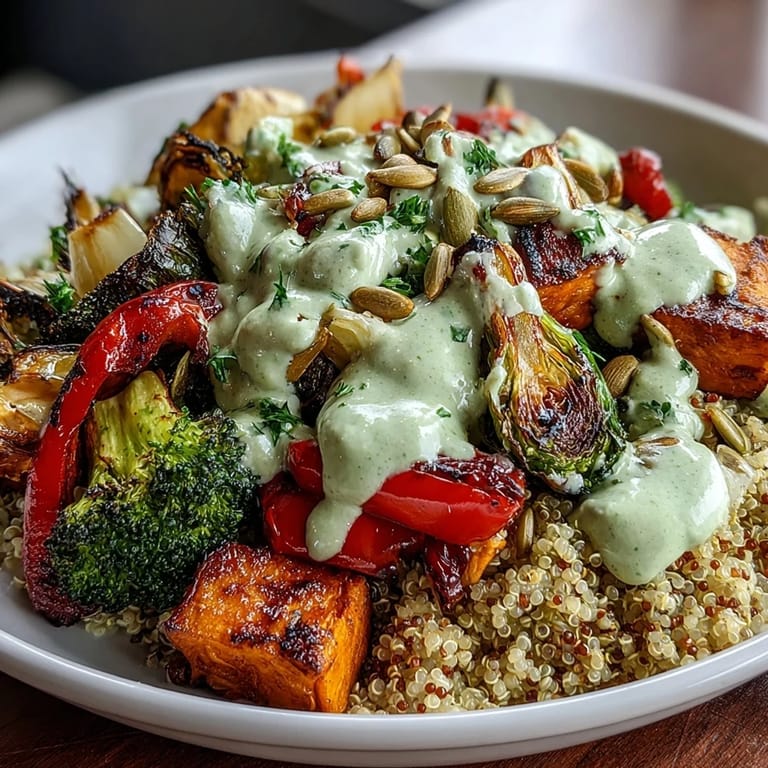
There's something meditative about arranging all the components so they look intentional and colorful, turning what could be a jumble of random vegetables into something that photographs well and tastes even better. The red cabbage catches light against the golden roasted vegetables, the green dressing pools around everything, and the pumpkin seeds catch in the dressing so they soften just slightly at the edges. Here's what makes it work:
- Layer your grains first so they act as a base and soak up some of the dressing.
- Arrange vegetables in groups so each bite has a little of everything instead of just one vegetable.
- Add the crunch elements (cabbage and seeds) right before serving so they don't get soggy from the dressing.
 Pin It
 This bowl taught me that plant-based eating doesn't mean sacrifice, it means paying attention to what makes food actually delicious. Every time I make it, I feel a little smarter and a lot more nourished.
Recipe FAQs
- → How do I roast the vegetables evenly?
Toss the vegetables in olive oil and seasonings, then spread them in a single layer on a baking sheet. Flip halfway through roasting at 425°F for even cooking and caramelization.
- → Can I substitute quinoa with other grains?
Yes, brown rice or farro are great alternatives. Cook them according to package directions and fluff before assembling the bowl.
- → How can I adjust the avocado dressing consistency?
Add water gradually while blending until the dressing reaches a smooth, creamy texture ideal for drizzling.
- → Are there options to add extra protein?
Consider topping the bowl with baked tofu, tempeh, or additional chickpeas for a protein boost.
- → What seasonal vegetables work well in this bowl?
Cauliflower, carrots, and Brussels sprouts make excellent substitutes or additions to keep the bowl fresh and varied.