 Pin It
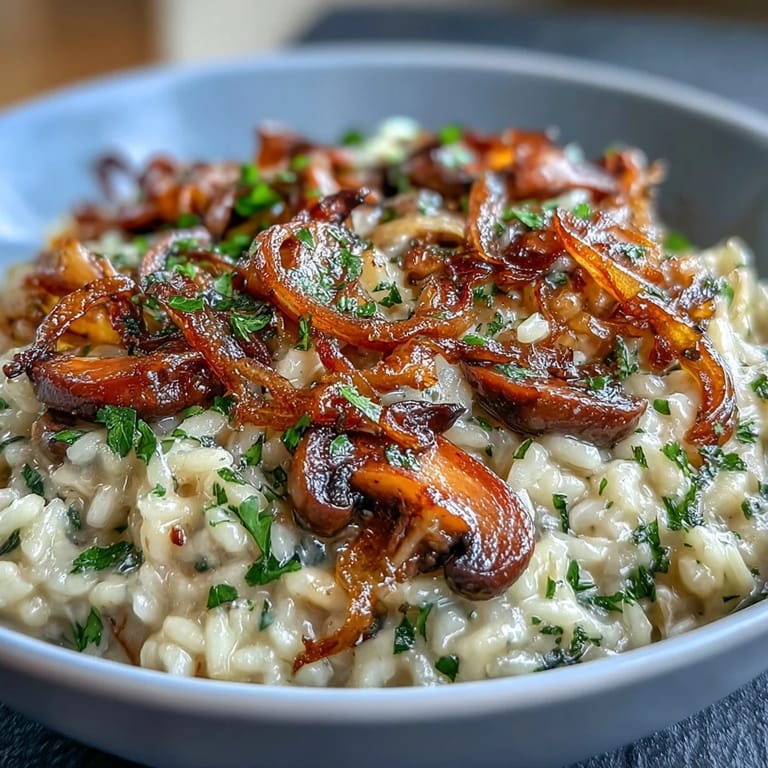
 There's something magical about the moment when onions finally surrender to heat, turning from sharp and pungent to silky-sweet gold. I discovered this risotto on a rainy autumn evening when I had a fridge full of mushrooms that needed rescuing and the kind of time that only happens on weekends. What started as a simple attempt to use up vegetables became the dish I now make whenever someone needs comfort in a bowl. The earthiness of the mushrooms paired with those caramelized onions creates a depth that feels almost luxurious, yet it's surprisingly straightforward to pull off.
I made this for my partner's parents on their first visit to our new kitchen, nervous about the whole "impressing the in-laws" situation until the aroma hit them at the door. My mother-in-law asked for the recipe before dessert even arrived, and there's something about that moment—when food becomes the bridge between strangers—that made this risotto special to me. Now whenever they visit, they ask if I'm making "that risotto," and honestly, I love having a dish that's become our thing.
Ingredients
- Yellow onions, thinly sliced: The star player here—low and slow cooking breaks down the sugars and transforms them into something almost caramel-like, which sounds simple until you taste it.
- Cremini or button mushrooms, sliced: Don't skip the browning step; you want them slightly crispy so they hold their texture instead of turning into mushroom mush.
- Garlic, minced: Just a whisper of it after the mushrooms cook prevents it from burning and keeps the flavor layered rather than aggressive.
- Fresh parsley, chopped: This isn't just garnish—it brightens everything at the end and reminds your palate that spring exists even in autumn.
- Arborio rice: The short, starchy grains are non-negotiable; they release starch gradually, which is what creates that signature creamy texture without any cream at all.
- Grated Parmesan cheese: Use freshly grated if you can; the pre-shredded stuff has anti-caking agents that prevent it from melting into the risotto as smoothly.
- Unsalted butter: Two separate additions—one early for caramelizing, one at the end for finishing—gives the dish a richer, more balanced flavor.
- Heavy cream: Optional, but I learned the hard way that it's a safety net if your rice is slightly undercooked and needs extra creaminess.
- Low-sodium vegetable broth, kept warm: Warming it beforehand means the rice doesn't shock when it hits the liquid, and low-sodium lets the other flavors shine.
- Dry white wine: It cuts through the richness and adds a subtle complexity; don't use anything you wouldn't drink yourself.
- Olive oil: Use good quality for the initial sauté and the mushrooms' sake.
- Salt and black pepper: Taste as you go; risotto is forgiving if you season gradually.
Tired of Takeout? 🥡
Get 10 meals you can make faster than delivery arrives. Seriously.
One email. No spam. Unsubscribe anytime.
Instructions
- Get your onions caramelizing:
- In your large skillet, warm 1 tablespoon each of olive oil and butter over medium-low heat, then add the sliced onions with a pinch of salt. You're going to stir them often over 20 to 25 minutes—they should gradually turn a deep golden brown, almost amber. This is the foundation of your dish, so don't rush it; the sweetness that develops is worth every minute.
- Brown the mushrooms:
- Once the onions are done, transfer them to a bowl and add the remaining olive oil to the same pan. The mushrooms want medium heat and about 7 minutes, stirring occasionally, until they've released their moisture and developed some color. When they're done, add the minced garlic for just 1 minute until the kitchen smells irresistible.
- Toast the rice:
- Pour in the Arborio rice and stir it constantly for 2 minutes—you'll hear it clicking slightly against the pan, which means it's toasting and won't turn mushy later. The grains should look slightly translucent at the edges when you're done.
- Add the wine:
- Pour in the white wine and keep stirring until it's mostly absorbed and you can see the bottom of the pan when you drag your spoon through it. This step infuses the rice with subtle flavor and begins the cooking process.
- Build the creaminess, one ladle at a time:
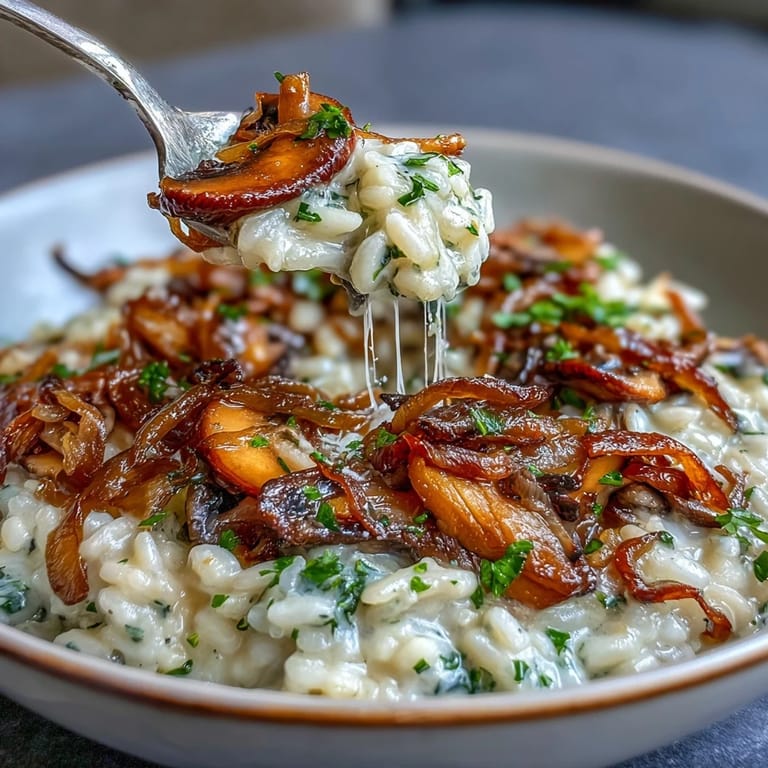
- Add warm broth a ladle at a time, stirring gently and letting each addition absorb before adding the next—this is the gentle, meditative part that takes about 18 to 20 minutes. You'll feel the rice softening and the liquid thickening, and you might not need every drop of broth, so keep tasting. The rice is ready when it's creamy but still has a slight bite to it, what Italians call al dente.
- Finish with love:
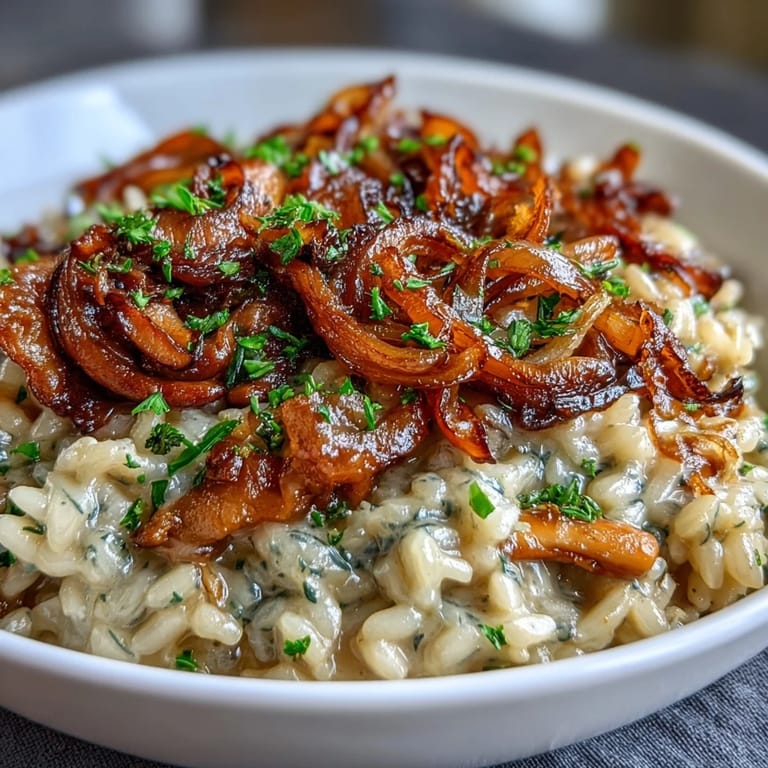
- Stir in those golden caramelized onions, the remaining butter, grated Parmesan, and cream if you're using it. Season with salt and pepper, then let it rest off heat for 2 minutes before finishing with fresh parsley and extra Parmesan.
 Pin It
 My favorite moment with this dish happened when a friend who usually orders takeout stayed for dinner and watched the whole process, fascinated by how something so delicious came together so methodically. They tasted it and said they'd never realized risotto could taste this good, that they'd assumed it was one of those fancy restaurant things forever out of reach. Seeing someone discover that great food doesn't require mystery or impossible techniques—just care and patience—reminded me why I cook.
The Caramelization Secret
Caramelized onions aren't complicated, but they do require patience and attention, which is why so many people skip them. The trick I learned is that salt helps draw out the onions' moisture early on, and medium-low heat prevents them from burning while they soften. A wooden spoon works better than a spatula because it scrapes the pan and helps distribute the heat evenly, and every 3 to 4 minutes of stirring ensures they cook uniformly and never stick to the bottom.
Why This Risotto Feels Different
Most risottos rely on stock and Parmesan to build flavor, which is fine, but this one lets the vegetables do the talking. The mushrooms bring umami depth, the onions contribute sweetness and body, and the rice itself becomes almost silky when treated with respect. When you bring those elements together with just enough butter and cheese to bind them, the result tastes way more complex than it has any right to be, which is the best kind of kitchen magic.
Variations and Occasions
This risotto is a blank canvas once you understand the base method, and I've learned to adjust it based on what's in the kitchen or what the meal needs. In summer, I add fresh peas or baby spinach right at the end for color and a slight contrast to the earthiness. For a vegan version, plant-based butter works surprisingly well, and nutritional yeast can replace Parmesan if you're avoiding dairy. Winter calls for a splash of truffle oil drizzled over the top, and spring sometimes gets fresh herbs like tarragon or chives stirred in instead of parsley.
- Add a handful of fresh peas or baby spinach at the very end if you want a pop of color and freshness.
- For a vegan take, swap the butter for plant-based and use nutritional yeast instead of Parmesan.
- A drizzle of good olive oil or even truffle oil on top transforms it into something special for guests.
 Pin It
 This risotto has become the dish I turn to when I want to cook something that feels like an accomplishment without being stressful, and I hope it becomes that for you too. There's real comfort in knowing that good food is within reach, that patience and a few quality ingredients can create something worth savoring.
Recipe FAQs
- → How do you caramelize onions properly?
Sauté sliced onions slowly over medium-low heat with a pinch of salt, stirring often for 20-25 minutes until deeply golden and sweet.
- → What type of mushrooms work best for this dish?
Cremini or button mushrooms provide earthy flavor and a tender texture when sautéed until browned.
- → Can I use broth alternatives?
Yes, low-sodium vegetable broth ensures a delicate flavor and can be substituted with homemade or store-bought varieties.
- → Why is Arborio rice preferred?
Arborio rice absorbs liquids slowly, releasing starch to create the risotto’s creamy texture while staying firm.
- → How is white wine used in cooking the rice?
White wine is added after toasting the rice, imparting subtle acidity and depth before broth absorption.
- → What can be added for extra color?
Fresh parsley or vegetables like baby spinach or peas brighten the dish visually and nutritionally.