 Pin It
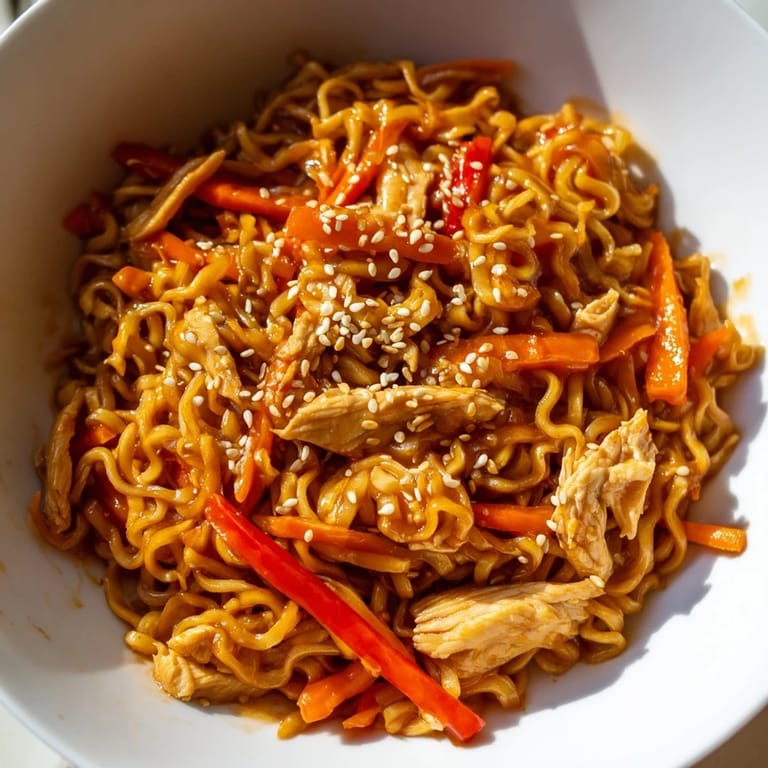
 My weeknight dinner rut ended on a Tuesday when I opened the pantry and found two lonely packs of instant ramen next to a bottle of sriracha. Instead of the usual sodium bomb in a bowl, I decided to drain those noodles and treat them like proper stir-fry material. What started as desperation became my most-requested dinner, proving that sometimes the best recipes come from refusing to order takeout for the third time in a week. The sizzle of garlic hitting hot oil still makes me smile, because it means dinner is exactly fifteen minutes away. This dish taught me that convenience ingredients can absolutely shine when you give them a little respect and a lot of heat.
The first time I made this for friends, I worried it was too simple to serve to guests. But watching them go back for seconds, scraping their plates clean and asking for the recipe, I realized that nobody cares about fancy techniques when the food just tastes right. One friend admitted she had been intimidating herself out of stir-frying for years, thinking she needed special equipment or skills. Now she texts me photos of her versions every few weeks, each one with her own twist. That night reminded me that the best kind of recipe is the one people actually make again, not the one that sits bookmarked forever because it requires three specialty stores and a culinary degree.
Ingredients
- Boneless, skinless chicken breasts: I slice mine thin against the grain so they cook fast and stay tender, and freezing them for fifteen minutes first makes slicing way easier.
- Instant ramen noodles: Yes, the cheap stuff works perfectly here, just toss those seasoning packets or save them for something else, because we are building our own flavor.
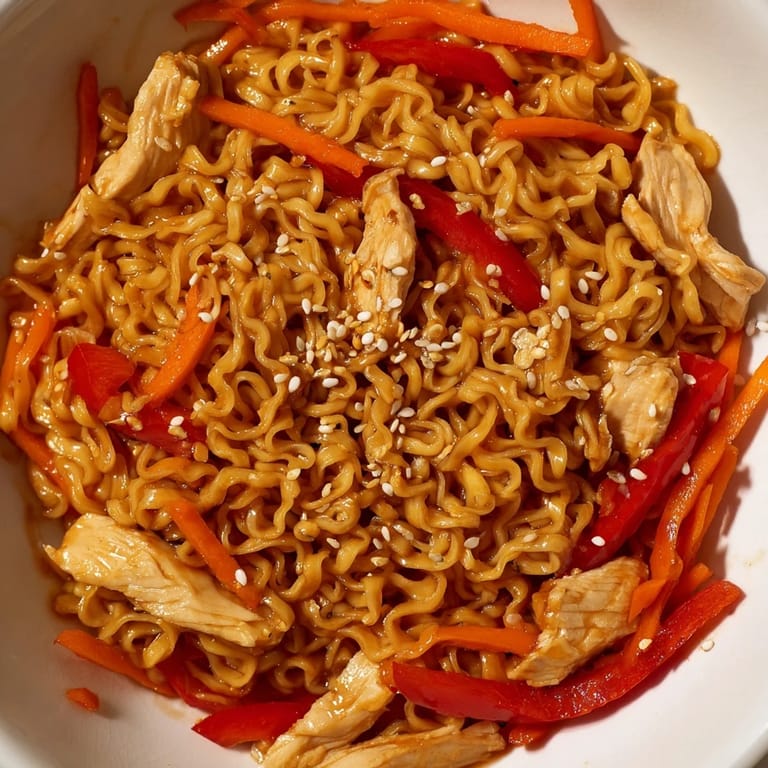
- Red bell pepper: The sweetness balances the heat beautifully, and I always slice it as thin as possible so it gets a little char without going limp.
- Broccoli florets: Keep them bite-sized and they will stay crisp-tender, adding texture that makes this feel like a real meal instead of just noodles.
- Carrot: Julienned carrots cook quickly and add a pop of color that makes the whole dish look vibrant and alive on the plate.
- Green onions: I save the green parts for the end so they stay bright and fresh, while the white parts can go in earlier if you want extra onion flavor.
- Garlic and ginger: These two are the aromatic foundation, and I learned to have them prepped and ready because once that oil is hot, things move fast.
- Soy sauce: This is your salt and umami base, and I always use regular soy sauce, not low-sodium, because you need that punch of flavor.
- Sriracha or chili garlic sauce: Start with one tablespoon and taste as you go, because heat tolerance is personal and you can always add more but you cannot take it back.
- Oyster sauce: This adds a subtle sweetness and depth that makes the sauce cling to the noodles instead of pooling at the bottom of the bowl.
- Sesame oil: A little goes a long way, and it brings that nutty, toasty flavor that makes everything taste more intentional.
- Brown sugar: Just two teaspoons balances the salty and spicy elements, rounding out the sauce so it does not taste one-dimensional.
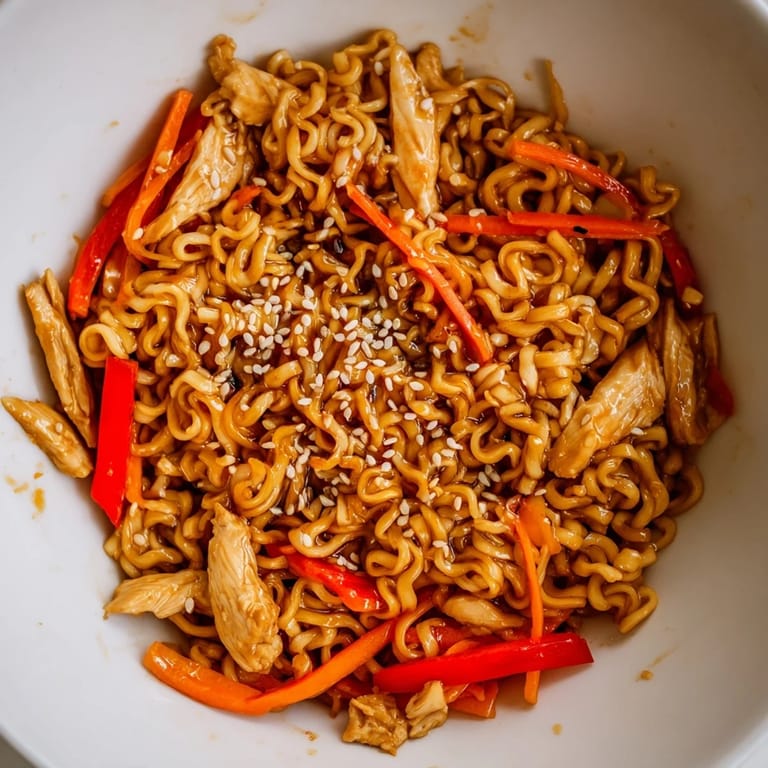
- Toasted sesame seeds and fresh herbs: Totally optional, but they make the dish feel restaurant-special and add a final layer of texture and color.
Tired of Takeout? 🥡
Get 10 meals you can make faster than delivery arrives. Seriously.
One email. No spam. Unsubscribe anytime.
Instructions
- Prep the noodles:
- Cook the ramen according to package directions, drain them well, and set them aside. They will finish cooking in the pan later, so do not worry if they seem a little plain right now.
- Mix the sauce:
- Whisk together the soy sauce, sriracha, oyster sauce, sesame oil, brown sugar, and water in a small bowl. Having this ready before you start cooking will save you from a panicked scramble later when everything is sizzling.
- Cook the chicken:
- Heat a tablespoon of vegetable oil in a large wok or skillet over medium-high heat, add the sliced chicken, and stir-fry until just cooked through, about four to five minutes. Remove it from the pan and set it aside so it does not overcook while you handle the vegetables.
- Bloom the aromatics:
- Toss the garlic and ginger into the same pan and stir-fry for thirty seconds until they smell incredible and start to sizzle. This step builds the flavor foundation, so do not skip it even though it is quick.
- Stir-fry the vegetables:
- Add the bell pepper, broccoli, and carrot to the pan and keep everything moving for three to four minutes. You want them tender but still crisp, with a little color on the edges where they have kissed the heat.
- Bring it all together:
- Return the chicken to the pan, add the cooked noodles, and pour the sauce over everything, tossing well to coat. Let it all heat through for two to three minutes, and you will see the sauce cling to the noodles like it was meant to be there.
- Finish and taste:
- Stir in the green onions, then taste and adjust the seasoning or spice level. This is your chance to make it perfect for your palate, so add a splash more soy sauce or another squeeze of sriracha if you want.
- Serve hot:
- Plate it up and garnish with toasted sesame seeds and fresh herbs if you are feeling fancy. The dish tastes just as good without them, but they do make it look like you tried a little harder.
 Pin It
 There was a night when my partner came home exhausted, and I had this on the table in the time it took him to change out of his work clothes. He stood in the kitchen doorway, eyes widening at the smell, and said it felt like coming home to a restaurant that knew exactly what he needed. That moment stuck with me because it reminded me that feeding someone well is one of the simplest and most powerful ways to show you care. This dish has become our shorthand for I have got you, even on the hardest days.
Making It Your Own
Once you have made this a few times, it becomes a template for whatever is in your fridge. I have swapped the chicken for tofu, shrimp, or even leftover steak, and every version works as long as you keep the sauce ratio the same. Vegetables are endlessly flexible too, snap peas, mushrooms, baby corn, zucchini, or whatever looks good at the market will fit right in. The key is cutting everything roughly the same size so it cooks evenly, and not being precious about exact measurements. Some nights I add more ginger because I am craving that zing, other times I go heavy on the garlic because that is the mood. This recipe rewards intuition and improvisation, which is exactly the kind of cooking I want to do on a weeknight.
Pairing and Serving
I usually serve this straight from the pan, family-style, with a stack of bowls and chopsticks on the table. A crisp, cold lager or a pot of jasmine tea makes a perfect companion, cutting through the richness and refreshing your palate between bites. If I am feeding a crowd, I will double the recipe and set out little dishes of extra sriracha, sesame seeds, and lime wedges so everyone can customize their bowl. Leftovers pack beautifully for lunch the next day, and I have been known to eat them cold straight from the container, standing in front of the fridge at midnight. There is something deeply satisfying about a dish that tastes good at any temperature and in any context.
Storage and Reheating
This keeps well in the fridge for up to three days in an airtight container, and honestly, the flavors deepen overnight as everything marinates together. When I reheat it, I add a splash of water or broth to loosen the sauce, then warm it gently in a skillet over medium heat, tossing frequently until everything is heated through. The microwave works in a pinch, but the skillet method brings back that just-cooked texture and keeps the vegetables from turning mushy. I have never tried freezing it because it never lasts long enough to make it to the freezer, but I suspect the noodles would get a little soft if you did.
- Store in an airtight container in the fridge for up to three days, and add a splash of liquid when reheating to refresh the sauce.
- Reheat in a skillet over medium heat for the best texture, tossing frequently until warmed through.
- Keep any garnishes separate and add them fresh when serving leftovers so they stay vibrant and crunchy.
 Pin It
 This recipe has earned its place in my weekly rotation because it delivers big flavor without demanding much from me, and that balance is everything on a busy weeknight. I hope it becomes one of those dishes you make without thinking, the kind that feels like muscle memory and tastes like home.
Recipe FAQs
- → Can I use fresh ramen noodles instead of instant?
Yes, fresh ramen noodles work beautifully. Cook them slightly shorter than the package suggests since you'll finish them in the stir-fry. Drain thoroughly to avoid excess moisture in the final dish.
- → How can I adjust the spice level?
The sriracha is the primary heat source. Start with 1 tablespoon and add more to taste, or use chili garlic sauce as a milder alternative. Red pepper flakes can be stirred in at the end for additional heat control.
- → Is this dish suitable for vegetarians?
Absolutely. Simply replace the chicken with firm tofu, tempeh, or additional vegetables like mushrooms and snap peas. Maintain the sauce and cooking method for equally satisfying results.
- → What vegetables work well as substitutes?
Bell peppers, broccoli, and carrots are core, but you can add or swap in snap peas, bok choy, mushrooms, baby corn, water chestnuts, or cabbage. Keep vegetables uniform in size for even cooking.
- → Can I prepare the sauce ahead of time?
Yes, whisk the sauce together several hours or a day in advance and store it in an airtight container. This makes the stir-frying process faster and allows flavors to meld slightly.
- → What's the best oil for stir-frying?
Vegetable oil, canola oil, or peanut oil work best due to their high smoke points. Avoid olive oil for stir-frying as it has a lower smoke point and will impart unwanted flavors at high heat.