 Pin It
 One autumn afternoon, my kitchen filled with the smell of charring peppers, and I realized I'd been making soup all wrong for years. There's something almost meditative about watching red peppers transform under heat, their skin blistering and darkening while the flesh underneath softens into silk. This roasted red pepper soup emerged from that happy accident—when I decided to roast the garlic alongside the peppers instead of cooking it separately. The result was a bowl of something so vibrant and smooth, it felt like bottled sunshine. Now it's become my go-to when I want something that tastes impressive but doesn't demand much from me.
I made this for my neighbor last winter when she was recovering from the flu, and watching her face light up when she tasted it—that's when I knew it wasn't just good, it was healing in a way that mattered. She asked for the recipe, then made it for her book club, and suddenly it became this thing that connected us all through a shared kitchen moment.
Ingredients
- Red bell peppers (4 large): These are the heart of the soup, and choosing peppers with thick walls means fewer seeds to deal with and more yielding flesh when roasted.
- Yellow onion (1 large, chopped): The sweetness in onions develops as they soften, so don't skip this foundation layer.
- Garlic cloves (4, unpeeled): Roasting garlic unpeeled keeps it from burning and lets it turn into something almost buttery.
- Carrot and celery: These aren't just flavor—they add body and a subtle earthiness that balances the pepper's brightness.
- Vegetable broth (3 cups): Use something you'd actually drink; it makes a real difference in the final taste.
- Olive oil (2 tbsp): Good olive oil matters here since it's not hidden by heavy cream or long cooking times.
- Harissa paste (1-2 tsp): Start with less and taste as you go—this stuff builds heat quickly and tastes different depending on the brand.
- Smoked paprika (1 tsp) and cumin (1/2 tsp): These spices whisper rather than shout, adding warmth without overpowering the peppers.
- Salt and pepper: Essential because even a silky soup needs seasoning to sing.
- Crème fraîche, yogurt, fresh herbs, and crusty bread: The toppings and sides that turn soup into an experience.
Tired of Takeout? 🥡
Get 10 meals you can make faster than delivery arrives. Seriously.
One email. No spam. Unsubscribe anytime.
Instructions
- Roast the peppers and garlic:
- Heat your oven to 425°F and spread those peppers and garlic cloves on a baking sheet with a drizzle of olive oil. Turn them halfway through so they char evenly and the skins blister—you'll know they're ready when they look almost blackened in spots and smell incredible. This takes about 25 to 30 minutes, and yes, you have to wait for it, but it's worth every minute.
- Steam and peel:
- Once they're soft and charred, move the peppers to a bowl and cover it with a plate or plastic wrap. The steam does the work of loosening the skin, so after 10 minutes, the peppers practically shed their burnt outer layer. Squeeze the roasted garlic out of its skins—it'll come out like butter.
- Build the base:
- In a large pot, warm the rest of your olive oil over medium heat and add the onion, carrot, and celery. Stir them around for 5 to 7 minutes until they're soft and starting to smell sweet. This is called sweating the vegetables, and it's the quiet foundation of good flavor.
- Bloom the spices:
- Toss in the roasted peppers, roasted garlic, paprika, cumin, and harissa paste. Stir everything together and let it warm for about a minute—you want those spices to wake up and release their oils. This small step makes them taste deeper and richer.
- Simmer together:
- Pour in the vegetable broth and bring everything to a boil, then lower the heat and let it simmer gently for 10 minutes. This time allows the flavors to get to know each other.
- Blend until silky:
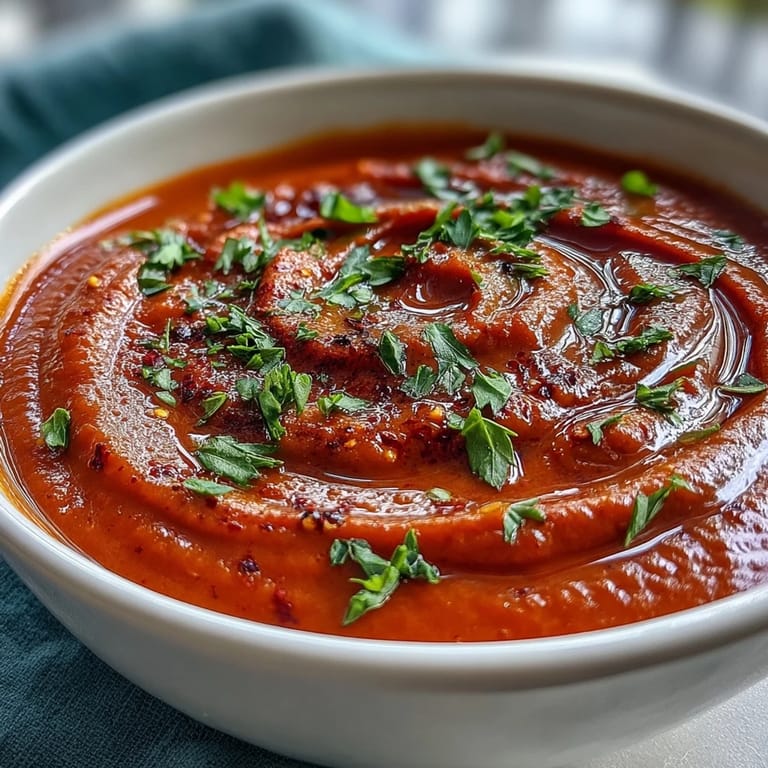
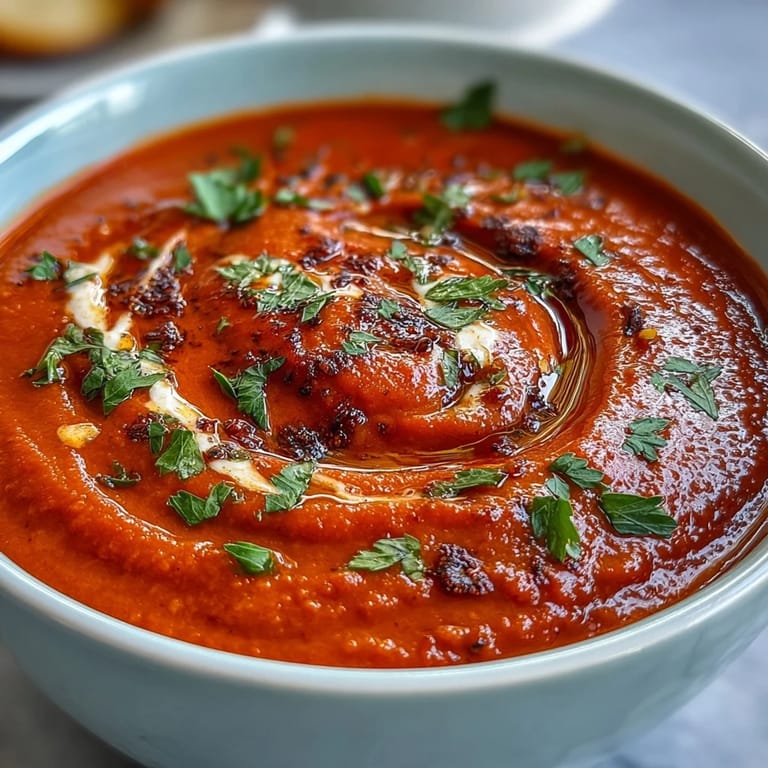
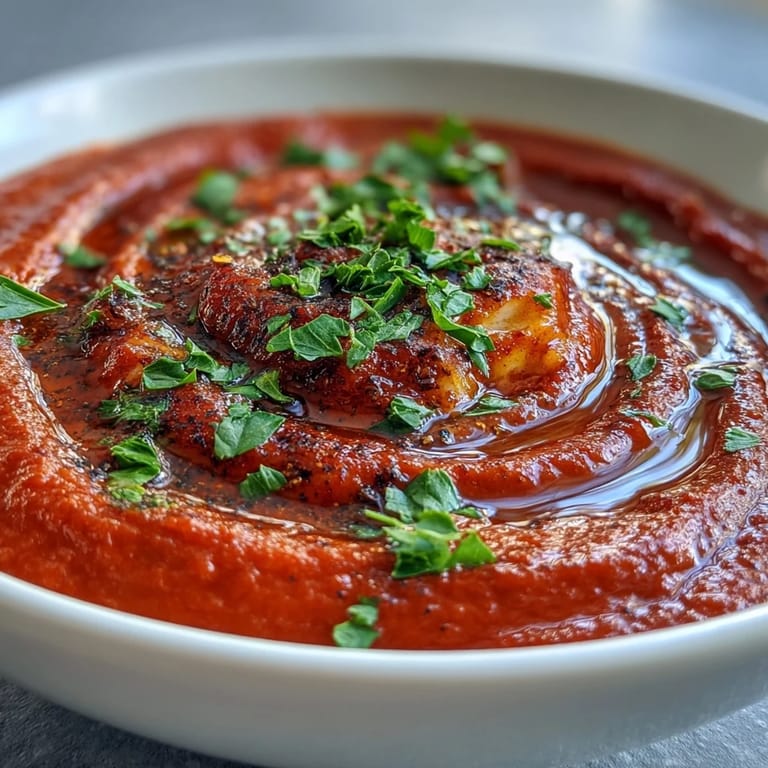
- Using an immersion blender right in the pot (or working in batches with a countertop blender), puree the soup until it's completely smooth with no visible chunks. You're aiming for that luxurious texture that makes people think you spent hours on this.
- Taste and serve:
- Season with salt and pepper to your liking, ladle into bowls, and top with a dollop of crème fraîche or yogurt and whatever fresh herbs you have. Crusty bread alongside turns it into a full meal.
 Pin It
 What struck me most was realizing that the best soups aren't complicated—they're just honest ingredients given the time to become something greater than themselves. This soup taught me that sometimes the most satisfying meals come from paying attention to the small things, like the sound of peppers blistering and the smell of caramelized garlic filling your kitchen.
The Magic of Roasting
Roasting completely changes red peppers from raw and crisp to soft and sweet, and it's one of those kitchen techniques that seems fancy but is genuinely foolproof. The heat concentrates their natural sugars and adds a subtle char that can't be replicated any other way. Once you understand how roasting transforms a vegetable, you'll start doing it with everything—tomatoes, garlic, carrots, onions—because the difference is immediately obvious and always worth it.
Adjusting the Heat and Flavor
Harissa paste is wonderful, but it's also personal, and what tastes like gentle warmth to one person might feel intense to another. I learned this the hard way by dumping in too much at once, which taught me to always start small and taste as I go. You can also lean into smokiness by using fire-roasted peppers, adding a pinch of chili flakes, or using smoked paprika as generously as you like—the soup is forgiving and wants you to make it your own.
Making It Your Own
This soup is vegetarian and gluten-free as written, and it's even easier to make vegan if you skip the crème fraîche and use a plant-based yogurt instead. Leftovers keep beautifully in the fridge for up to three days, and reheating gently on the stovetop brings back that silky texture without any separation or breaking.
- If you don't have an immersion blender, a regular blender works just as well—just blend in batches and be careful with hot liquid.
- A squeeze of lemon juice stirred in at the very end brightens the whole bowl without making it taste acidic.
- Crème fraîche is richer than yogurt, but both work beautifully depending on whether you want something decadent or lighter.
 Pin It
 This soup has become one of those recipes I make without thinking, which is the highest compliment I can give. It reminds me that the simplest dishes, made with care and good ingredients, are often the ones people remember.
Recipe FAQs
- → Can I use jarred roasted peppers instead of fresh?
Jarred roasted peppers work well in a pinch, though fresh peppers roasted at home develop deeper char and sweeter flavor. If using jarred, pat them dry thoroughly and skip the roasting step entirely, adding them directly when blending.
- → How can I make this soup extra creamy without dairy?
For a vegan creamy version, try adding a quarter cup of soaked raw cashews or coconut milk during blending. Alternatively, a peeled and boiled potato adds luxurious body without altering the flavor profile significantly.
- → What can I substitute for harissa paste?
Any chili paste works well—try sambal oelek for similar heat, or Aleppo pepper flakes crushed with a little olive oil and garlic for a milder option. Even Sriracha or Calabrian chili paste can step in with excellent results.
- → How long does this soup keep in the refrigerator?
This soup stores beautifully for 3 to 4 days in an airtight container. The flavors actually deepen and meld overnight, making it an excellent meal-prep option. Reheat gently over low heat, adding a splash of broth if it has thickened.
- → Can I freeze this roasted pepper soup?
Absolutely. Cool completely before transferring to freezer-safe containers, leaving some headspace for expansion. It freezes well for up to 3 months. Thaw overnight in the refrigerator and reheat slowly, whisking to restore silky texture.