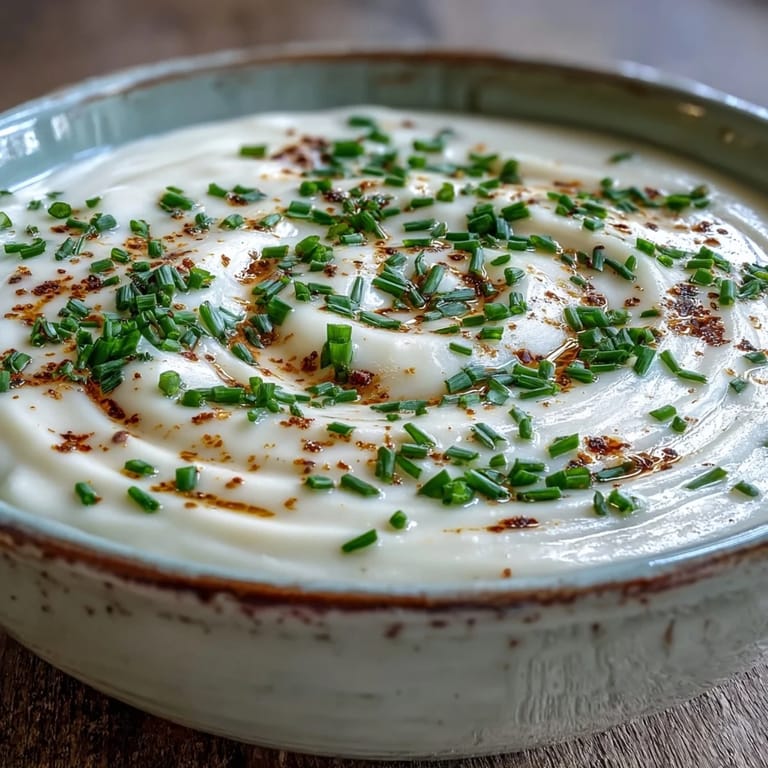
 Pin It
 There's something quietly magical about celery root that most people overlook until they taste it in a proper bisque. I discovered this soup during a gray November afternoon when a farmers market vendor handed me a knobby, mud-covered root and insisted I try it in something creamy. Skeptical but curious, I went home and started peeling, and within an hour the kitchen filled with this subtle, almost sweet earthiness that made me understand why the French have been celebrating this vegetable for centuries. That first spoonful—silky, delicate, utterly refined—changed how I thought about humble root vegetables forever.
I made this soup for my sister's dinner party last winter, and watching her close her eyes after the first taste while everyone else went silent was worth every minute of prep work. She asked for the recipe three times before I even finished clearing the bowls. What struck me most wasn't the compliments though—it was how a simple soup made the whole evening feel like an occasion, like we were doing something a little more refined than our usual chaos.
Ingredients
- Celery root (2 large, about 900 g): This is the star, so choose roots that feel heavy and firm with minimal soft spots—they'll give you the sweetest flavor when cooked down.
- Leek (1 medium): Use only the white and light green parts; they're milder and sweeter than the darker greens, which would add bitterness.
- Onion (1 medium): A standard yellow onion works beautifully here, providing base flavor without overpowering the delicate celery root.
- Yukon Gold potato (1 medium): This variety adds natural creaminess and body without needing extra starches or cream.
- Garlic (2 cloves): Minced fine so it melts into the soup rather than appearing in chunks.
- Vegetable stock (4 cups): Use good quality stock—it's one of only a few liquid components, so it matters more than you'd think.
- Whole milk (1 cup): Brings richness without the heaviness of all cream, or swap for non-dairy if that's your preference.
- Heavy cream (1/2 cup): Just enough to make it bisque, not soup that happens to have cream in it.
- Unsalted butter and olive oil (2 tbsp and 1 tbsp): Together they create a flavorful base for sautéing aromatics without burning.
- Bay leaf, nutmeg, salt, and white pepper: White pepper keeps the soup looking pristine, while nutmeg adds an almost imperceptible warmth that makes people wonder what the secret is.
- Chives or microgreens for garnish: These are your finishing touch—they add color and a fresh bite that contrasts the richness.
Tired of Takeout? 🥡
Get 10 meals you can make faster than delivery arrives. Seriously.
One email. No spam. Unsubscribe anytime.
Instructions
- Sauté your aromatics gently:
- Melt butter with olive oil over medium heat, then add leek, onion, and garlic, letting them soften for 3 to 4 minutes until they're sweet-smelling and translucent but not browned. If they start to brown, your heat is too high—dial it back and listen to them sizzle quietly instead of pop and hiss.
- Build the flavor foundation:
- Add diced celery root and potato, stirring everything together so the vegetables get coated in that golden, aromatic fat. Cook for another 3 to 4 minutes, watching as the vegetables start to soften slightly at the edges.
- Simmer until everything surrenders:
- Pour in your stock, add the bay leaf, then bring everything to a gentle simmer, cover, and let it bubble softly for 25 to 30 minutes until you can easily pierce the celery root with a fork. The longer cooking time here is what makes the flavor so mellow and integrated rather than raw-tasting.
- Add cream and spice:
- Fish out the bay leaf, stir in milk and nutmeg, then let it all warm through for a minute before blending. The nutmeg will bloom slightly as it heats, releasing its warmth into the soup.
- Blend until impossibly smooth:
- Using an immersion blender, purée the soup directly in the pot with slow, steady movements, working from the bottom up so you catch everything. If using a countertop blender, work in batches and be careful—hot soup can splatter—and hold the lid slightly ajar if needed to let steam escape.
- Finish with cream and seasoning:
- Stir in the heavy cream and gently reheat without letting it boil, which would make it lose its silky texture. Taste and adjust salt and white pepper until it sings—the seasoning should be subtle but complete.
- Serve with intention:
- Ladle into warmed bowls (cold bowls will cool the soup down in seconds), then finish with a scattering of chives or microgreens and that optional drizzle of cream or truffle oil if you're feeling decadent.
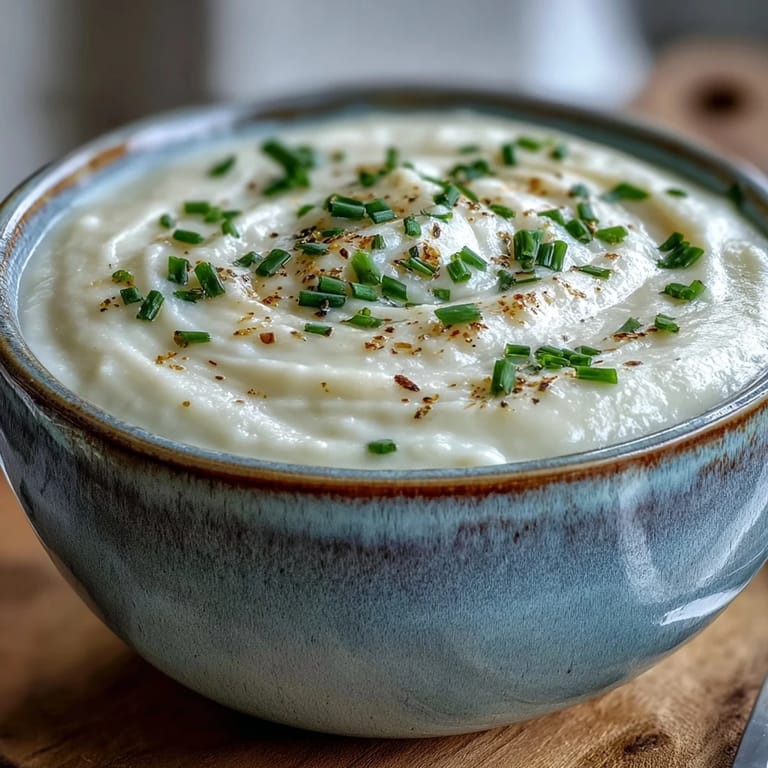 Pin It
 There's a moment in cooking when you realize something simple is about to become something elegant, and for me it happens the second the blender hits those cooked vegetables and transforms them into silk. This soup has given me that moment more times than I can count, and it never gets old.
Why White Pepper Changes Everything
I used black pepper the first three times I made this, and honestly it tasted fine—but then a friend who cooks seriously mentioned white pepper, and I realized the difference immediately once I switched. Black pepper has a sharper, almost sharp bite, while white pepper dissolves into the soup with a warmer, more integrated spice that lets the celery root shine rather than compete. It's also completely invisible in the finished soup, which matters when you're going for that restaurant-quality look.
The Secret of Celery Root
Most people don't realize that celery root tastes almost nothing like celery—it's sweeter, more delicate, with an earthiness that becomes refined rather than vegetal when you cook it properly. The key is not to overshadow it with heavy spicing or aggressive cooking; instead, treat it the way you'd treat a good stock, building flavor carefully and letting it speak for itself. Once you understand that, you'll start seeing celery root as an ingredient worth seeking out, not just something that showed up at the farmers market.
Variations and When to Use Them
This bisque is delicious exactly as written, but I've played with it enough times to know where flexibility lives. For a vegan version, full-fat coconut milk or cashew cream works beautifully, though cashew cream feels more luxurious and lets the celery root flavor come through more clearly than coconut milk does. You can also add a handful of celery leaves at the very end for a grassy note, serve it chilled on summer evenings, or float a small crispy sage leaf on top if you're feeling autumnal.
- Pair with Sauvignon Blanc or Chardonnay to let the wine's acidity cut through the richness.
- Serve alongside crusty bread or herbed croutons to give your guests something to do with their spoons.
- Make it ahead—this soup actually tastes better the next day once flavors have settled and become more integrated.
 Pin It
 This is the kind of soup that makes you feel like you're in a Paris bistro but also reminds you that the best food often comes from quiet afternoons in your own kitchen. Make it, taste it, and let it become one of those recipes you return to again and again.
Recipe FAQs
- → What makes celery root bisque distinctive?
Celery root, also called celeriac, offers a delicate nutty flavor that's milder than traditional celery. When blended into a bisque, it creates an exceptionally smooth, velvety texture with subtle sophistication that sets it apart from other cream soups.
- → Can I make this bisque ahead of time?
Absolutely. This bisque actually improves in flavor when made 1-2 days ahead. Store it in the refrigerator and reheat gently over low heat, stirring occasionally. Add the final cream garnish just before serving for the freshest presentation.
- → What's the best way to achieve ultra-smooth texture?
An immersion blender works well, but for the silkiest results, use a high-speed countertop blender in small batches. Strain the puréed soup through a fine-mesh sieve for an exceptionally refined texture worthy of fine dining.
- → What can I substitute for heavy cream?
Full-fat coconut milk creates a rich vegan alternative with subtle sweetness. Cashew cream also works beautifully for a neutral flavor. For lighter versions, use half-and-half or evaporated milk, though the texture won't be quite as luxurious.
- → What proteins pair well with this bisque?
Grilled shrimp, seared scallops, or poached lobster complement the delicate flavors beautifully. For vegetarian options, serve alongside crusty bread with herb butter or a simple green salad with vinaigrette.
- → Why add potato to celery root bisque?
Yukon Gold potatoes act as a natural thickener and contribute to the silky mouthfeel without overpowering the celery root's subtle flavor. Their starch content helps create the luxurious, velvety texture that defines a classic bisque.