 Pin It
 My wok sat unused for months until a friend mentioned she'd gone vegan, and suddenly I was searching my kitchen for something that felt both familiar and entirely new. That first time making teriyaki tofu, I was skeptical—would crispy edges and a glossy sauce actually work without meat?—but the moment I heard that satisfying sizzle of cornstarch-dusted cubes hitting hot oil, I knew this wasn't a compromise dish. It became the weeknight meal I craved, the one that proved you don't need to miss anything when you cook with intention.
Last summer, I made this for a potluck where I didn't know if anyone ate plant-based, and I almost brought it as a side dish instead. I'm grateful I brought it as the main—halfway through the evening, I caught someone going back for thirds, and when I asked, they admitted they didn't eat tofu usually but something about the way it was cooked changed their mind. That's when I realized this recipe isn't about replacing anything; it's about discovering something entirely satisfying on its own.
Ingredients
- Firm tofu, drained and pressed (14 oz): Pressing removes moisture so the cornstarch coating clings properly and creates those golden, crispy edges—skip this step and you'll regret it.
- Cornstarch (2 tbsp for tofu, 1 tbsp for sauce): The secret to restaurant-quality crispy exterior; it thickens the sauce perfectly without any floury taste.
- Vegetable oil (2 tbsp): High heat oil keeps the tofu from sticking and creates that crackling texture everyone loves.
- Broccoli florets (10 oz): Cut them bite-sized so they cook evenly and stay tender-crisp rather than mushy.
- Snap peas (5 oz): These stay naturally crisp even with heat, adding sweetness and that satisfying crunch.
- Red bell pepper (1): Sliced thin so it softens just enough while keeping its color and slight crispness.
- Spring onions (2): Save half for garnish at the end—the raw bite against the warm sauce is a textural revelation.
- Soy sauce or tamari (1/4 cup): Use tamari if you're cooking gluten-free; the umami depth matters more here than anywhere else in this dish.
- Maple syrup or honey (2 tbsp): Maple brings earthiness that honey doesn't, but either works depending on what you have and your mood.
- Rice vinegar (1 tbsp): The acidity lifts everything; don't skip it for the sake of sweetness.
- Sesame oil (1 tbsp): A little goes a long way—this ingredient is why the sauce tastes authentic rather than homemade and thin.
- Fresh ginger, grated (1 tbsp): Freshly grated makes all the difference; jarred ginger tastes like a shadow of the real thing.
- Garlic cloves, minced (2): Mince them fine so they dissolve into the sauce rather than sitting as sharp chunks.
- Sesame seeds and fresh cilantro: These finish the dish with visual brightness and flavor that reminds you why you cooked from scratch.
Tired of Takeout? 🥡
Get 10 meals you can make faster than delivery arrives. Seriously.
One email. No spam. Unsubscribe anytime.
Instructions
- Prepare your tofu like you mean it:
- Cut your pressed tofu into roughly 3/4-inch cubes—uniform size matters because smaller pieces crisp faster while larger ones stay tender inside. Toss the cubes in cornstarch using your hands until every surface is dusted white, which takes longer than you think but is worth every second.
- Achieve the sizzle:
- Heat your skillet or wok until a drop of water dances across the surface, then add oil and wait another 30 seconds for it to shimmer. Working in batches if needed, lay tofu cubes down without moving them for 2-3 minutes per side, letting each face turn a burnished golden brown before you flip.
- Build your vegetable momentum:
- Once tofu is resting, crank the heat slightly higher and add your broccoli and snap peas to the same pan—this only takes 3-4 minutes, and you're watching for that moment when the vegetables are hot through but still have backbone. Add your bell pepper and let everything get a light char in spots.
- Mix your sauce while vegetables cook:
- In a small bowl, whisk together soy sauce, maple syrup, rice vinegar, sesame oil, ginger, and garlic—the aroma that rises is your kitchen telling you this is going to be good. Don't rush this; let the ginger and garlic mellow slightly into the liquid rather than staying raw and sharp.
- Bring it all together:
- Return your tofu to the pan with the vegetables, pour the sauce over everything, and stir gently so all the pieces get coated without breaking apart. Let it come to a gentle simmer, which takes just a minute.
- Thicken and finish:
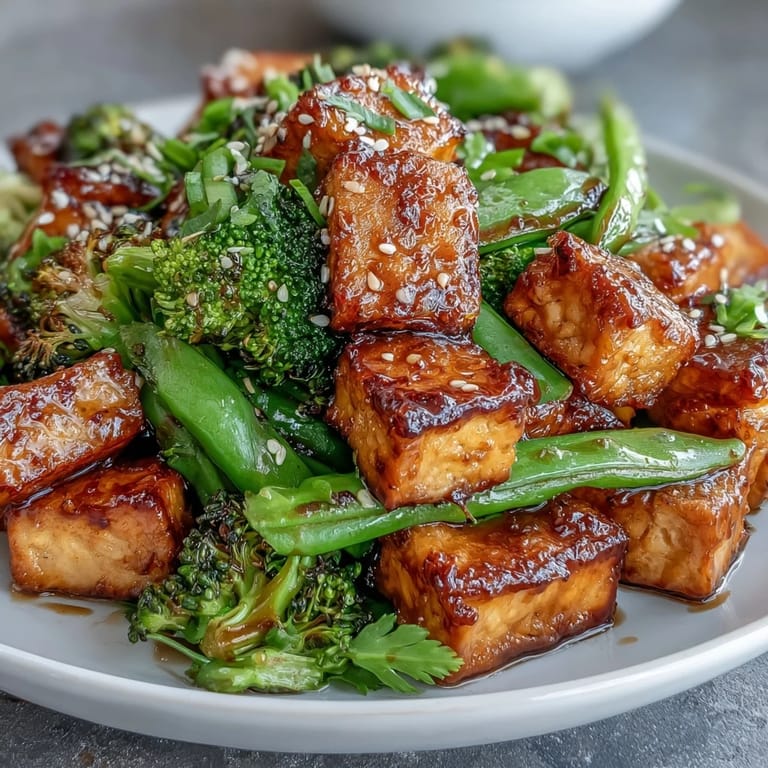
- Stir your cornstarch slurry (cornstarch mixed with cold water) one more time and drizzle it in while stirring—within 30 seconds you'll see the sauce go from thin and runny to glossy and clinging to every piece. Cook for another minute to remove any starchy taste, then pull the pan from heat and taste.
- Plate with intention:
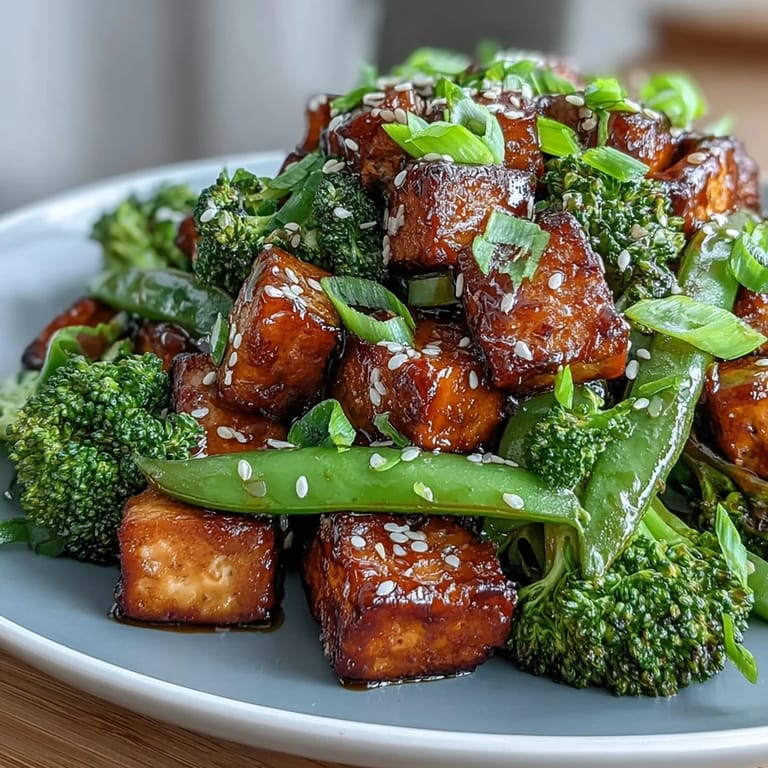
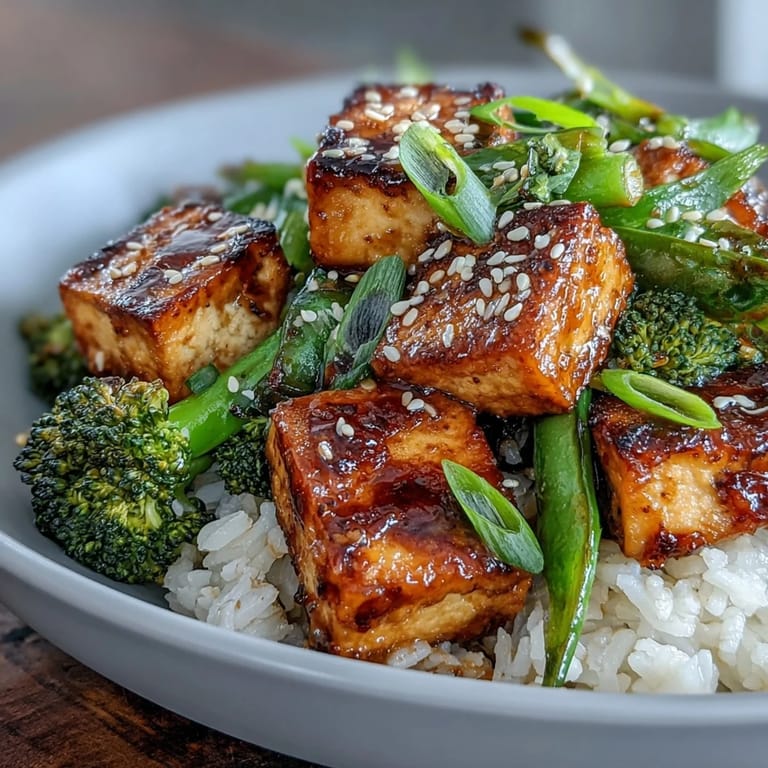
- Divide among bowls or plates, scatter sesame seeds over top, add fresh spring onion and cilantro if you have it, and serve immediately over steamed rice or noodles while everything is still warm and the sauce still clings beautifully.
 Pin It
 There's a moment in cooking, usually around the middle of a weeknight when you're tired and thinking about takeout, where something shifts. For me, it happens right when the teriyaki hits the pan and the kitchen fills with that sweet-savory steam—suddenly you remember why you showed up to cook. This dish is full of those moments.
The Tofu Question
I used to think tofu was bland because I was cooking it wrong, treating it like something delicate that needed gentle handling when it actually thrives on high heat and bold flavors. The cornstarch coating isn't just a trick; it's the difference between tofu that tastes like tofu and tofu that tastes like dinner. When you're crisping the cubes, listen for that sizzle—it's telling you something is working. If your pan is quiet, your heat isn't high enough, and you won't get those edges that make people forget they're eating something plant-based.
Building Flavor in the Sauce
Homemade teriyaki is simpler than you think, but it requires tasting as you go because each bottle of soy sauce, each type of maple syrup, brings slightly different salt and sweetness to the party. I learned to start with less sauce than you think you'll need and add it gradually so you don't end up with something overly syrupy—the vegetables release water as they cook, which naturally loosens everything. The ginger and garlic matter more than the amount of any single ingredient; they're what separates this from generic stir-fry sauce.
Vegetable Selection and Timing
The vegetables I've listed work beautifully together, but the real pleasure of this dish is swapping in whatever looks good at the market. Asparagus, bok choy, mushrooms, zucchini—they all work if you adjust timing slightly based on their density. Broccoli and snap peas are my defaults because they have different textures; broccoli softens into the sauce while snap peas keep their bite, giving you variety in every forkful.
- Cut everything roughly the same size so nothing finishes cooking before its partner.
- If using mushrooms or squash, which release liquid, cook them separately for a minute first so they don't water down your sauce.
- Tender vegetables like spinach or bok choy should go in at the very end so they barely wilt rather than disappear into the background.
 Pin It
 This is the meal you make when you want something that tastes like you spent hours cooking but actually took half that time. Serve it hot, with extra sauce on the side and someone you like at the table.
Recipe FAQs
- → How do I achieve crispy tofu in this dish?
Press the tofu to remove excess moisture, coat with cornstarch, and fry in hot vegetable oil until all sides are golden and crisp.
- → Can I use other vegetables instead of broccoli and snap peas?
Yes, seasonal vegetables like bell peppers, carrots, or green beans work well and can be substituted as desired.
- → How can I make the teriyaki sauce gluten-free?
Replace regular soy sauce with tamari to ensure the sauce is gluten-free without compromising flavor.
- → What is the best way to serve this dish?
Serve hot alongside steamed jasmine rice or soba noodles to complement the savory flavors and textures.
- → Is it necessary to marinate the tofu beforehand?
Marinating tofu in soy sauce for 10 minutes before frying enhances flavor but can be skipped for a quicker preparation.