 Pin It
 There's something almost meditative about the ritual of making miso soup, especially on mornings when the kitchen feels too quiet. My neighbor in Tokyo once told me that miso soup isn't really about the ingredients but about the moment you take to honor them, and I've never forgotten that. The first time I made it properly at home, I realized she was right—watching the miso swirl into that steaming broth felt like the simplest kind of magic. Now whenever I need something grounding, something that tastes like care, this is what I reach for.
I made this for a friend who was recovering from a cold, and she later told me it was the first thing all week that actually tasted like food and not just necessity. That's when I understood—this soup doesn't need fanciness or complicated technique. It just needs respect for each simple ingredient and the patience to let them shine.
Ingredients
- Dashi stock (4 cups): This is your foundation, the quiet hero that carries everything else—use kombu-based if you're vegetarian, and let it come to just a gentle shimmer, never a rolling boil.
- White or yellow miso paste (3 tablespoons): The soul of this soup, slightly sweet and deeply savory, but never let it boil or it loses its living probiotics and delicate flavor.
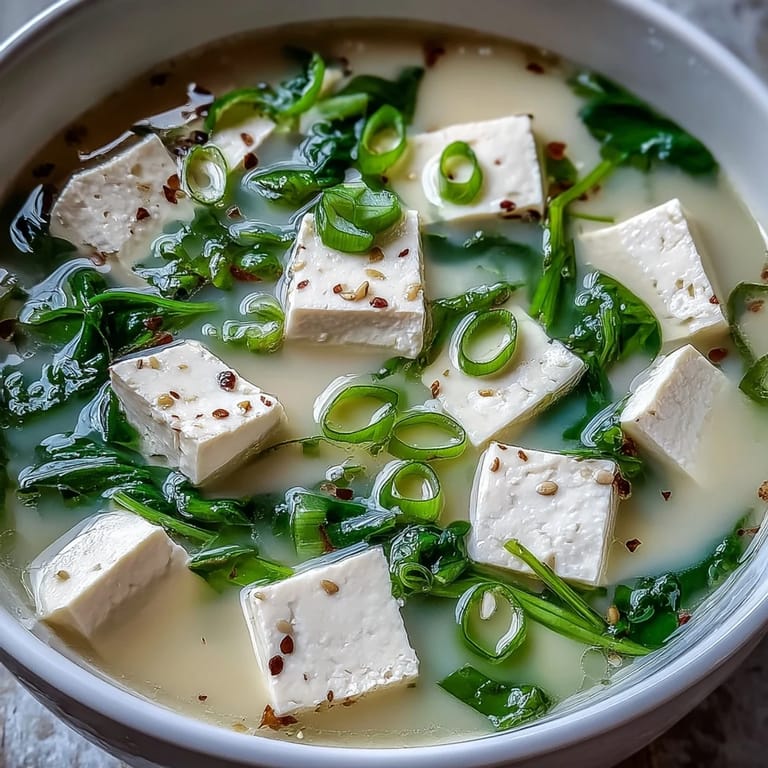
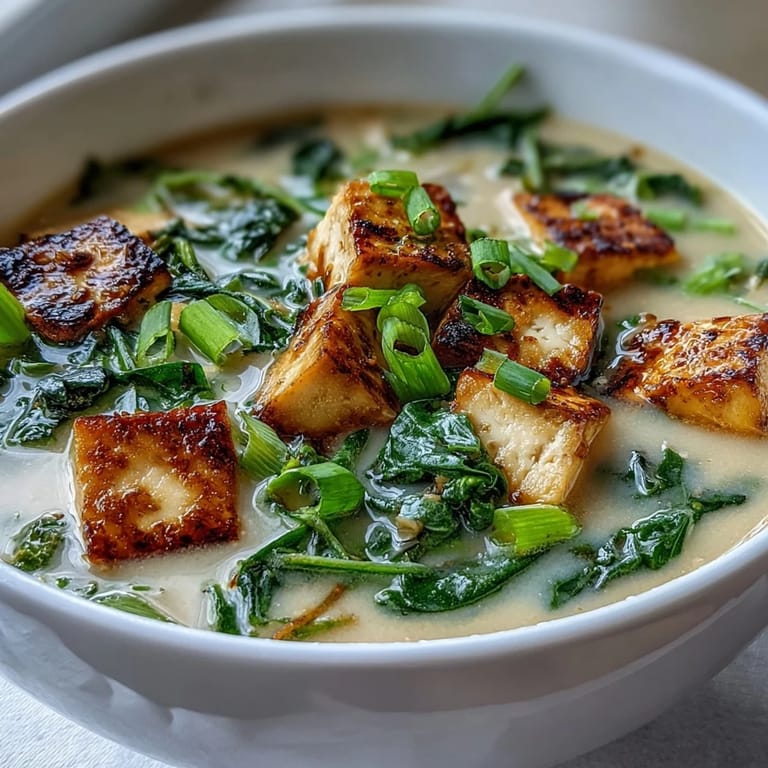
- Firm tofu (120 g), cut into half-inch cubes: Soft enough to dissolve on your tongue but sturdy enough to hold its shape if you handle it gently.
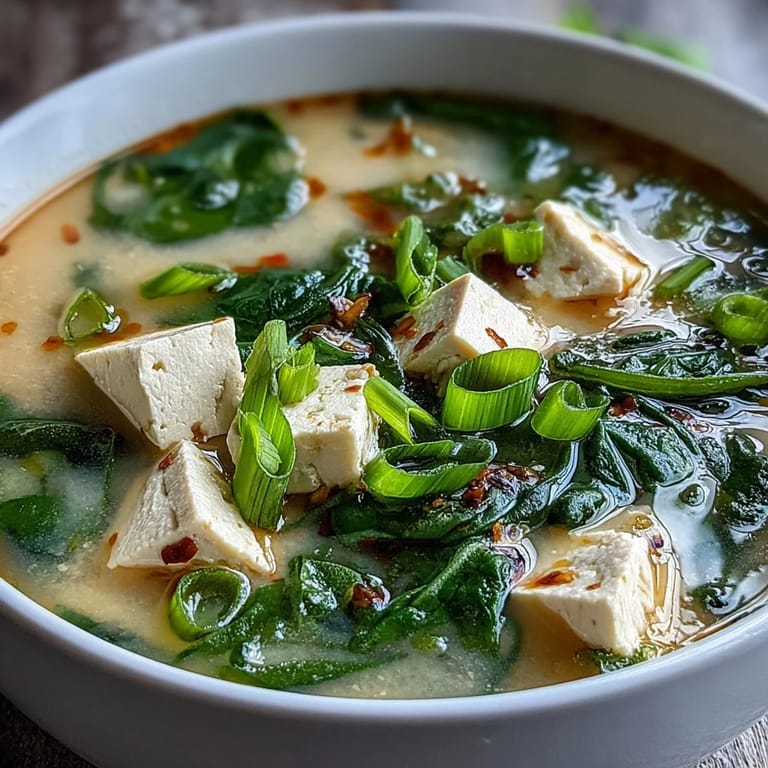
- Fresh spinach leaves (2 cups), roughly chopped: Add it at the last moment so it stays bright green and tender, not dark and mushy.
- Green onions (2), thinly sliced: These go in off the heat, so they keep their sharp, fresh bite and their color stays vibrant.
Tired of Takeout? 🥡
Get 10 meals you can make faster than delivery arrives. Seriously.
One email. No spam. Unsubscribe anytime.
Instructions
- Warm your dashi gently:
- Pour your dashi into a medium saucepan and bring it to a gentle simmer over medium heat—you want small bubbles rising slowly, not an aggressive boil. Listen for that soft, almost whispered sound of simmering.
- Dissolve the miso carefully:
- Ladle about half a cup of the hot broth into a small bowl with your miso paste and whisk until it's completely smooth and silky, then pour everything back into the pot. This step matters because it keeps the miso from clumping and prevents the heat from destroying its delicate flavor.
- Add the tofu and let it warm:
- Gently stir in your tofu cubes and let them simmer for 2 to 3 minutes just until heated through—they'll soften slightly and absorb the broth's flavor. Resist the urge to stir too much or they'll break apart.
- Wilt in the spinach:
- Stir in your chopped spinach and cook for just 1 to 2 minutes until it's tender but still holds its green color. The heat will continue cooking it even after you turn off the flame.
- Finish with green onions off the heat:
- Remove the pot from heat and stir in your sliced green onions so they stay crisp and fresh, almost raw, adding their sharp onion brightness to each bowl.
- Serve immediately:
- Ladle into bowls right away while everything is still steaming and the flavors are at their most alive.
 Pin It
 One winter evening, I made this soup for my partner when the day had been long and difficult for both of us. We sat at the kitchen counter in silence for a moment, just holding the warm bowls and breathing in the steam, and somehow everything felt a little less heavy. That's when food becomes something more than nutrition—it becomes permission to pause.
The Art of the Perfect Broth
A great miso soup lives or dies by its broth, and this is where you can't rush or improvise. Kombu dashi has this umami depth that makes even the simplest version taste refined and complete. I learned to always use filtered water and let the kombu steep gently rather than aggressively boiling it—the difference is subtle but undeniable, like the difference between a whisper and a shout. When you taste truly good dashi for the first time, you'll understand why Japanese cooks treat it with such reverence.
Variations That Still Honor the Original
Once you understand the basic structure of miso soup, you can play with it gently. Some mornings I add a handful of mushrooms—shiitake if I have them, or even just cremini—and they absorb the broth beautifully. Other times a few sheets of wakame seaweed go in, or a tiny drizzle of sesame oil right at the end for earthiness and depth. The key is adding these things thoughtfully, one at a time, tasting as you go, rather than throwing everything in and hoping it works.
Building Confidence in Your Kitchen
This recipe taught me that cooking well doesn't always mean complexity—sometimes it means understanding a few simple things so thoroughly that you can make them feel effortless. The first time you nail the miso dissolving technique or get the spinach wilting time exactly right, you'll feel the confidence shift. These small wins add up until you're not following a recipe anymore; you're having a conversation with your ingredients. Remember, the most important ingredient is your attention.
- Taste your broth before adding anything else to know your baseline flavor.
- Keep everything prepared and ready before you start cooking so you can move at the soup's pace, not rush it.
- Save a little extra dashi to adjust the soup's strength if your miso is stronger or milder than expected.
 Pin It
 This soup is proof that the most nourishing meals are sometimes the simplest ones, made with presence rather than pretense. I hope you find in it what I did—a moment of quiet in your day.
Recipe FAQs
- → What is the best type of miso to use?
White or yellow miso paste works best for a mild, slightly sweet flavor that complements the tofu and greens.
- → Can I substitute the tofu with another ingredient?
Firm tofu is ideal for maintaining texture, but tempeh or soft beans can be alternative plant-based options.
- → How do I keep the spinach fresh and vibrant in the broth?
Add the spinach towards the end of cooking and cook just until wilted to preserve color and nutrients.
- → What is kombu dashi and why is it recommended?
Kombu dashi is a seaweed-based stock providing a savory umami base without fish, perfect for vegetarian and vegan versions.
- → How can I vary the flavors of this broth?
Adding mushrooms, wakame seaweed, or a touch of toasted sesame oil introduces depth and variation without overpowering the base.