 Pin It
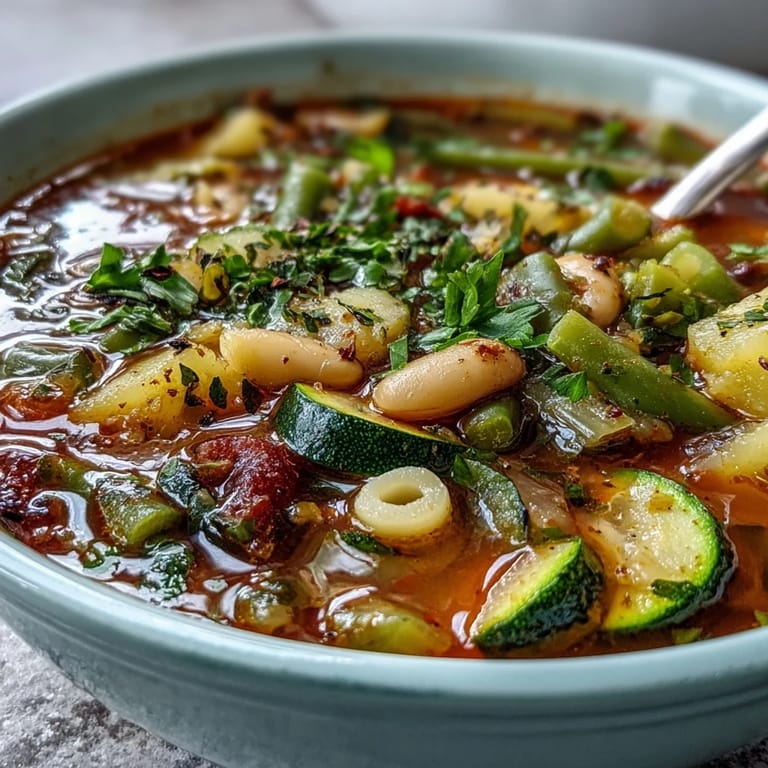
 My neighbor Maria taught me to make minestrone on a crisp October afternoon when her garden was overflowing with vegetables she couldn't possibly use alone. She moved through the chopping with such ease, barely measuring anything, just tossing handfuls of carrots and zucchini into the pot while telling me stories about making this soup in her grandmother's kitchen in Liguria. What struck me most wasn't the recipe itself, but how she insisted the real magic happened when you let it simmer—that's when the kitchen fills with the kind of smell that makes everyone pause and ask what you're cooking.
I made this soup last winter for my book club, and something unexpected happened: three different people asked for the recipe before dessert even came out. One friend went back for thirds and admitted she'd been stress-eating cereal straight from the box all week, but this made her remember why actual food mattered. That moment taught me that simple, honest dishes sometimes say more than fancy ones ever could.
Ingredients
- Olive oil: Use a decent quality one here since it's one of the first things you taste—it sets the whole flavor foundation.
- Onion and garlic: These two are your flavor base, so don't rush the sautéing or skip the mincing; the finer they are, the more evenly they distribute through the broth.
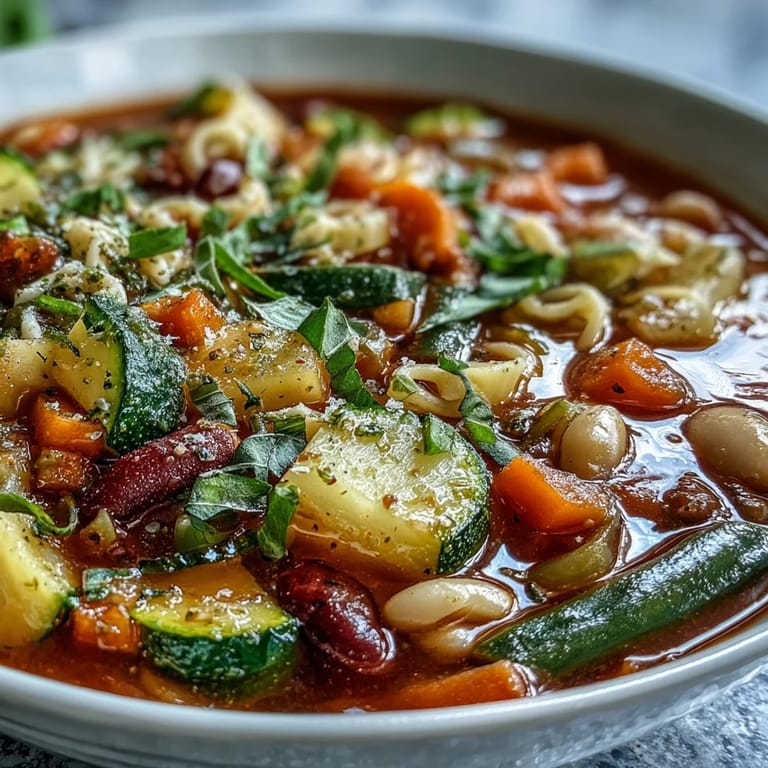
- Carrots, celery, and zucchini: Cut them roughly the same size so they cook at the same rate and the soup feels balanced rather than chunky and uneven.
- Potato: This isn't filler—it thickens the broth naturally and adds a subtle sweetness that rounds out the acidity from the tomatoes.
- Green beans: They stay bright and slightly crisp if you don't overcook them, so add them early enough to soften without turning to mush.
- Canned tomatoes: Don't drain the juices; that's liquid gold for your broth and worth every bit of the tomato flavor.
- Vegetable broth and water: The ratio matters—too much liquid and your soup becomes more like vegetable tea, so measure it out.
- Cannellini beans: Rinse them well to remove the canned liquid, which can make your soup cloudy and starchy-tasting.
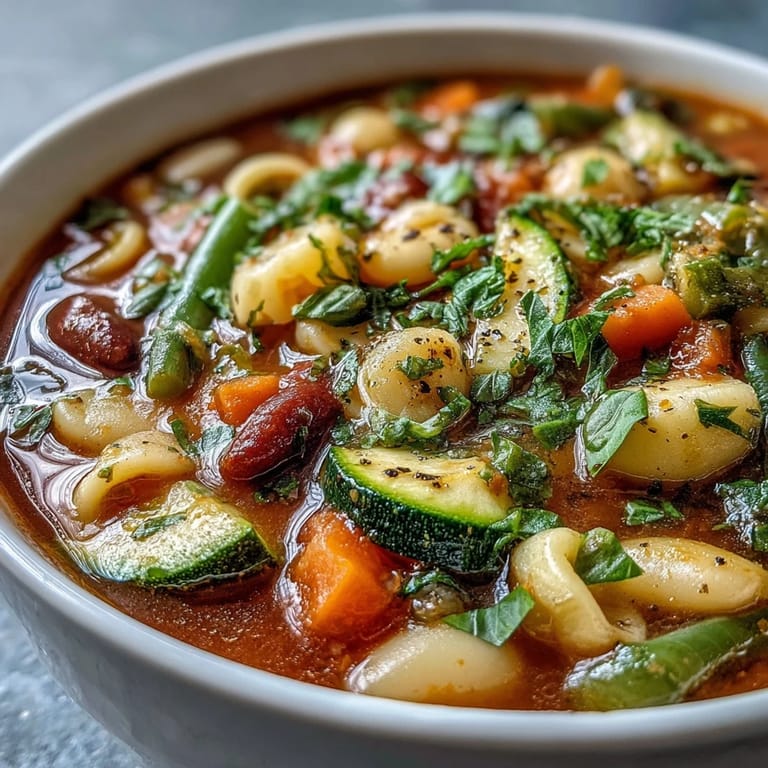
- Pasta: Small shapes like ditalini work best because they don't overpower the vegetables and cook in roughly the time it takes to finish the soup.
- Dried herbs: Oregano and basil are classic, but these dried versions are stronger than fresh, so resist the urge to double them.
- Fresh parsley and basil: Add these at the very end to keep their brightness and fragrance—cooking them too long turns them dull and bitter.
- Parmesan cheese: Optional but transformative; a shower of it adds richness and saltiness that makes people want another bowl.
Tired of Takeout? 🥡
Get 10 meals you can make faster than delivery arrives. Seriously.
One email. No spam. Unsubscribe anytime.
Instructions
- Start the foundation:
- Heat your olive oil over medium heat and add the chopped onion and minced garlic, letting them cook for about 2 to 3 minutes until they're soft and smell incredibly fragrant. You'll know they're ready when the onion turns translucent and the garlic has released its perfume into the oil.
- Build your vegetable layers:
- Toss in the carrots, celery, zucchini, potato, and green beans, stirring them into the onion mixture and letting them soften for 5 to 6 minutes. This step matters because you're not fully cooking them yet—you're just waking them up and letting them start releasing their flavors into the oil.
- Add the liquid and seasoning:
- Pour in the canned tomatoes with all their juices, followed by the vegetable broth and water, then sprinkle in the dried oregano, basil, bay leaf, and a generous pinch of salt and pepper. Give everything a good stir, then bring it to a boil—you'll see the surface start to move and bubble at the edges first.
- Simmer and develop flavor:
- Once it's boiling, reduce the heat to a gentle simmer, place the lid on the pot, and let it cook untouched for 15 minutes. This is when you can step away, pour yourself something to drink, and let the vegetables break down slightly while the flavors meld together.
- Finish with beans and pasta:
- After 15 minutes, remove the lid, add your drained cannellini beans and the small pasta, and let it all simmer without the lid for 10 to 12 minutes until the pasta is tender and the vegetables are soft but not falling apart. Stir occasionally so the pasta doesn't stick to the bottom.
- Final touches:
- Fish out the bay leaf, stir in your fresh parsley and basil, then taste the soup and adjust the salt and pepper to your preference. A little extra seasoning at the end brightens everything up and reminds you why you love this dish.
- Serve it right:
- Ladle the soup into bowls and top with freshly grated Parmesan if you'd like—watch how people's faces change when that cheese melts into the hot broth.
 Pin It
 There was a moment when I realized this soup had become more than just a recipe—it was something I made whenever a friend was going through a hard time, or when I wanted to prove to someone that you could be a good cook without owning a single fancy appliance. It became the dish I reached for when I wanted to feel connected to something bigger than my own kitchen.
The Beauty of Seasonal Swaps
The real secret to falling in love with minestrone is understanding that it's not a fixed recipe but a conversation between you and what's available right now. In spring, I swap in fresh peas and younger zucchini; come summer, I add shredded kale or torn cabbage instead of the potato; and in winter, I've been known to throw in diced butternut squash for warmth and color. Maria once told me that her grandmother's version changed practically every week based on what the market offered, and that taught me to stop seeing recipes as sacred law and start seeing them as suggestions whispered by cooks who came before me.
How to Make It Heartier
If you want to transform this from a light vegetarian soup into something that feels more like a full meal, there are a few directions you can take it without losing its essential character. Some people sauté a few ounces of diced pancetta with the onion at the very beginning, letting the fat render and perfume everything that follows; others simply double the amount of cannellini beans or add a second can of white beans to create more substance. You could also stir in a handful of small pasta shells instead of ditalini, or add a generous cup of cooked farro or barley in the last few minutes if you want something that feels almost stew-like without losing the soup's lightness.
Storing and Reheating Like a Pro
This soup actually tastes better the next day because the flavors have had time to get to know each other and become deeper and more cohesive. Store it in airtight containers in the refrigerator for up to four days, or freeze it in portions for up to two months—though I'd recommend freezing it before you add the pasta, which can get mushy once thawed. When you reheat it, do so gently over medium heat on the stovetop, stirring occasionally and adding a splash of broth or water if it's become too thick, then taste and adjust your seasonings one more time.
- If you're freezing it, leave a little space at the top of the container because the soup will expand slightly as it freezes.
- Fresh pasta shapes cook so quickly that you can simply cook a fresh batch while you're reheating the broth, then combine them just before serving to keep everything light and tender.
- A swirl of fresh pesto stirred in at the very end transforms the entire character of the soup without making it complicated.
 Pin It
 This soup taught me that sometimes the most profound cooking isn't about technique or exotic ingredients, but about showing up in the kitchen with a few honest vegetables and the intention to feed people well. Make it, share it, and watch how something so simple becomes the meal people remember.
Recipe FAQs
- → What vegetables work best in minestrone?
Traditional minestrone includes carrots, celery, zucchini, potatoes, and green beans. You can adapt based on seasonality—spinach, kale, or cabbage work wonderfully in colder months, while fresh tomatoes and bell peppers shine in summer.
- → Can I make this vegan?
Absolutely. Simply omit the Parmesan garnish or use a plant-based alternative. The soup itself is naturally vegan, relying on vegetables, beans, and pasta for its hearty character.
- → What pasta should I use?
Small pasta shapes like ditalini, elbow macaroni, or small shells work best as they cook evenly and fit nicely on a spoon. For gluten-free versions, use your favorite gluten-free pasta variety.
- → How long does minestrone keep?
Stored in an airtight container in the refrigerator, it keeps well for 4-5 days. The flavors often develop and improve overnight. The pasta may absorb some liquid, so add a splash of water or broth when reheating.
- → Can I freeze this soup?
Yes, but consider cooking the pasta separately and adding it when serving. Pasta can become mushy when frozen and reheated. Freeze the soup without pasta for up to 3 months, then cook fresh pasta when ready to enjoy.
- → What can I serve with minestrone?
Crusty Italian bread is ideal for soaking up the flavorful broth. A simple green salad with vinaigrette balances the heartiness. For a traditional Italian experience, pair with a glass of Chianti or your favorite red wine.