 Pin It
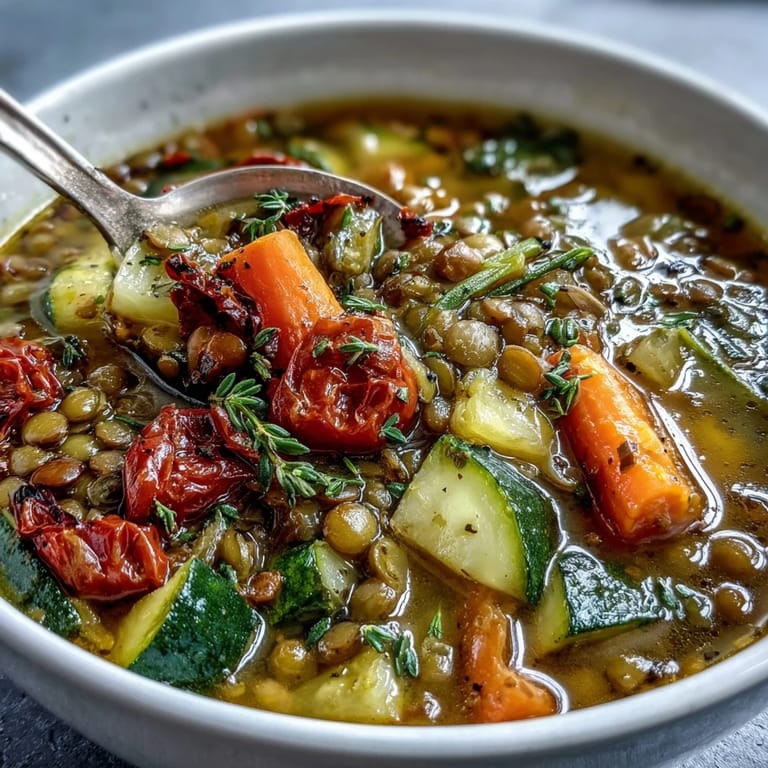
 There's something about the sound of vegetables hitting a hot baking sheet that signals the start of something good. I discovered this soup on a Tuesday when my fridge was getting crowded and I had a half-empty bag of lentils staring at me accusingly. Rather than toss everything into a pot the usual way, I decided to roast the vegetables first, and that small choice changed everything—suddenly the soup had depth and sweetness I'd never noticed before.
I made this for my neighbor once when she'd had a rough week, and she sat at my kitchen counter while the pot simmered, just breathing in the steam. She said it smelled like someone cared about her, which maybe sounds dramatic, but that's honestly what this soup does—it wraps around you like a hug that happens to be nutritious.
Ingredients
- Dried green or brown lentils, 1 cup (200 g): Rinsing them first removes the dust and any little stones hiding in there, a habit I picked up after biting down on something crunchy once—never again.
- Carrots, 2 medium, peeled and diced: They're your natural sweetness; don't skip them or use carrot juice as a substitute, the texture matters.
- Celery stalks, 2, diced: This is the quiet backbone of the whole thing, building flavor without announcing itself.
- Zucchini, 1 medium, diced: It softens into almost nothing, which is the whole point—it disappears into comfort.
- Red bell pepper, 1, diced: The color stays vibrant even after roasting, which is why I always choose red over green here.
- Yellow onion, 1 medium, chopped: The roasting brings out its sweetness in a way raw onion never could.
- Garlic, 3 cloves, minced: Fresh garlic only; the jarred stuff turns bitter when it hits the hot oil.
- Cherry tomatoes, 1 cup (150 g), halved: They burst slightly during roasting, creating little pockets of concentrated flavor throughout the soup.
- Olive oil, 2 tablespoons, divided: One tablespoon goes on the vegetables for roasting, the other into the pot for sautéing—this separation is intentional.
- Vegetable broth, 6 cups (1.5 L): Use good quality broth; it becomes the foundation of every spoonful.
- Dried thyme, 1 teaspoon: Dried herbs are sharper than fresh here, which is exactly what you want in a soup that simmers.
- Dried oregano, 1 teaspoon: It partners with the thyme to create that warm, herbaceous note that lingers.
- Smoked paprika, 1 teaspoon: This is the secret weapon that makes people ask what's in the soup—don't leave it out.
- Bay leaf, 1: Remove it before serving; I learned that the hard way by nearly swallowing it.
- Salt and freshly ground black pepper, to taste: Taste as you go; the roasted vegetables already carry some salt from the seasoning process.
- Fresh parsley, 2 tablespoons, chopped: A handful at the end brightens everything and makes it feel intentional.
- Lemon juice, from ½ lemon, optional: A squeeze at the end lifts the whole pot and makes the flavors sharper.
Tired of Takeout? 🥡
Get 10 meals you can make faster than delivery arrives. Seriously.
One email. No spam. Unsubscribe anytime.
Instructions
- Get your oven ready:
- Preheat to 425°F (220°C) while you're gathering your vegetables—it needs those few minutes to build heat.
- Roast the vegetables:
- Toss your diced carrots, celery, zucchini, bell pepper, and cherry tomatoes with 1 tablespoon olive oil, salt, and pepper, then spread them on a baking sheet in a single layer. Roast for 20 minutes until the edges are lightly caramelized and the smell fills your kitchen—you'll know it's right when the tomatoes start to collapse.
- Build your flavor base:
- While the vegetables roast, heat the remaining 1 tablespoon olive oil in a large pot over medium heat and sauté your chopped onion for about 4 minutes until it turns soft and translucent. Add your minced garlic and cook for just 1 minute more—longer than that and it burns, shorter and it's still raw.
- Bring it together:
- Stir the rinsed lentils into the pot, then add the roasted vegetables, vegetable broth, thyme, oregano, smoked paprika, and bay leaf. Bring everything to a boil, then reduce the heat and let it simmer uncovered for 25 minutes, stirring occasionally, until the lentils are tender enough to break easily against the side of the pot.
- Taste and adjust:
- Remove the bay leaf, then taste a spoonful and adjust your seasoning with salt, pepper, and a squeeze of lemon juice if you have it. This is where you make it yours.
- Serve with intention:
- Ladle the soup into bowls while it's still steaming and scatter fresh parsley on top.
 Pin It
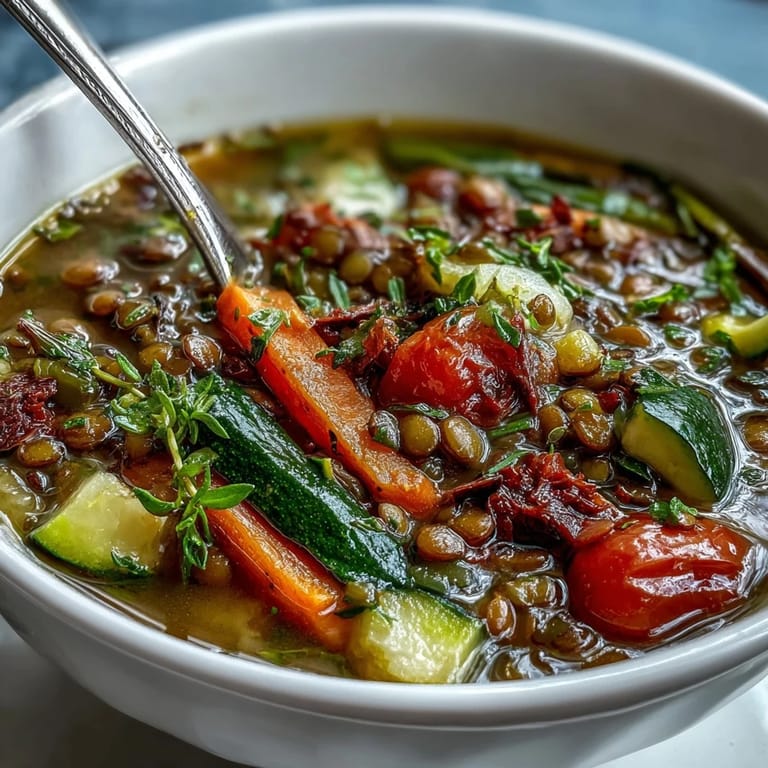
 On a cold January evening, I made a double batch of this soup and left a container at my friend's door without telling her. Three days later she texted me that her kid had asked for seconds, which for a vegetable soup felt like winning the lottery.
The Magic of Roasting
Most people think soup is just about throwing things in water and waiting, but roasting changes everything. When vegetables hit a hot sheet, their natural sugars caramelize and concentrate, creating this deep, sweet undertone that you can't replicate by simmering alone. I used to make soups the quick way until I realized I was missing out on an entire flavor dimension that takes only an extra 20 minutes and zero additional skill.
Customizing Without Overthinking
The beauty of this soup is that it's forgiving in the best way possible. Don't have zucchini? Swap in sweet potato or butternut squash and roast them alongside everything else. No red bell pepper? Yellow or orange work just as well, though red gives you the prettiest color. The structure stays solid because the lentils are your anchor and the broth is your stage—everything else is just an actor playing their part.
Serving and Storage Wisdom
This soup tastes even better the next day once the flavors have had time to get to know each other, which makes it perfect for meal prep or bringing to work in a thermos. It keeps in the refrigerator for up to five days and freezes beautifully for up to three months if you want to make a big batch and save yourself future effort. Pair it with crusty bread that you can dip into the broth, or serve it as is when you want something lighter.
- If you're reheating, add a splash of broth or water since the soup thickens slightly as it sits.
- For extra richness on cold nights, stir in a tablespoon of tomato paste during the flavor-building step and let it cook for one minute.
- The lemon juice at the end isn't optional if you want the soup to feel bright and complete—don't skip it thinking you're saving ingredients.
 Pin It
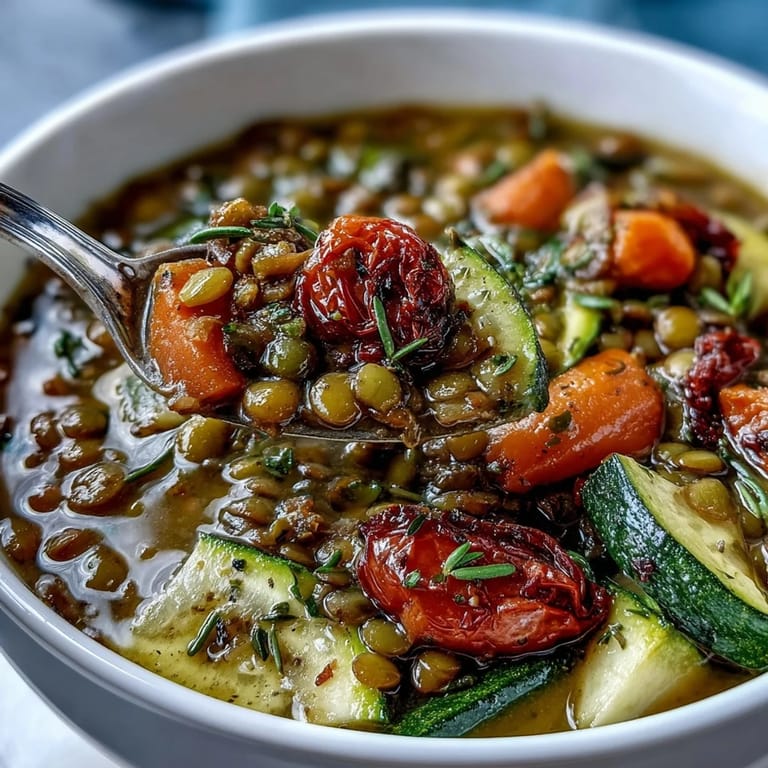
 There's something grounding about a soup that fills your kitchen with warmth and your bowl with vegetables you roasted yourself. Make this when you need comfort or when you want to take care of someone, because that's what it does best.
Recipe FAQs
- → Can I use red lentils instead of green or brown?
Red lentils cook faster and break down more, creating a creamier texture. If using red lentils, reduce cooking time to 15-20 minutes and expect a thicker consistency.
- → How do I store leftover soup?
Store in an airtight container in the refrigerator for up to 5 days. The soup also freezes well for up to 3 months. Reheat gently on the stovetop, adding extra broth if needed.
- → Can I skip roasting the vegetables?
Yes, you can add the diced vegetables directly to the pot with the lentils. However, roasting adds a caramelized depth of flavor that enhances the overall taste of the soup.
- → What can I substitute for vegetable broth?
Use chicken broth if not vegetarian, or simply use water with additional herbs and a bouillon cube. You may need to adjust salt seasoning accordingly.
- → How can I make this soup more filling?
Add diced potatoes or sweet potatoes with the other vegetables, or serve with crusty bread, rice, or quinoa on the side for a more substantial meal.
- → Do I need to soak the lentils first?
No, green and brown lentils don't require soaking. Simply rinse them under cold water to remove any debris before adding them to the pot.