 Pin It
 There's something about the smell of salmon hitting a hot pan that instantly transports me to a dinner party where everything felt a little too ambitious until it wasn't. I'd been standing in the kitchen feeling genuinely unsure if I could pull off something that looked restaurant-quality in under thirty minutes, but the moment that glaze came together—honey meeting soy sauce in this glossy, aromatic mixture—I knew I was onto something special. What started as a weeknight experiment became the dish I keep coming back to, the one that somehow feels both impressive and entirely manageable.
I made this for my sister during her first week at a new job, and she sat at my kitchen counter just quietly eating and asking me to write down what I'd done. The way the sesame oil finished everything felt like a small kindness—not fussy, just thoughtful. She's made it at least a dozen times since, and it's become her go-to proof that weeknight cooking doesn't have to be complicated to be memorable.
Ingredients
- Salmon fillets (about 150 g each): Look for fillets that feel firm to the touch and smell clean and briny, not fishy—that's your signal they're fresh enough to shine in something this simple.
- Soy sauce (low sodium recommended): I learned the hard way that full-sodium soy sauce can push the glaze toward overly salty, so low-sodium gives you control over the final seasoning.
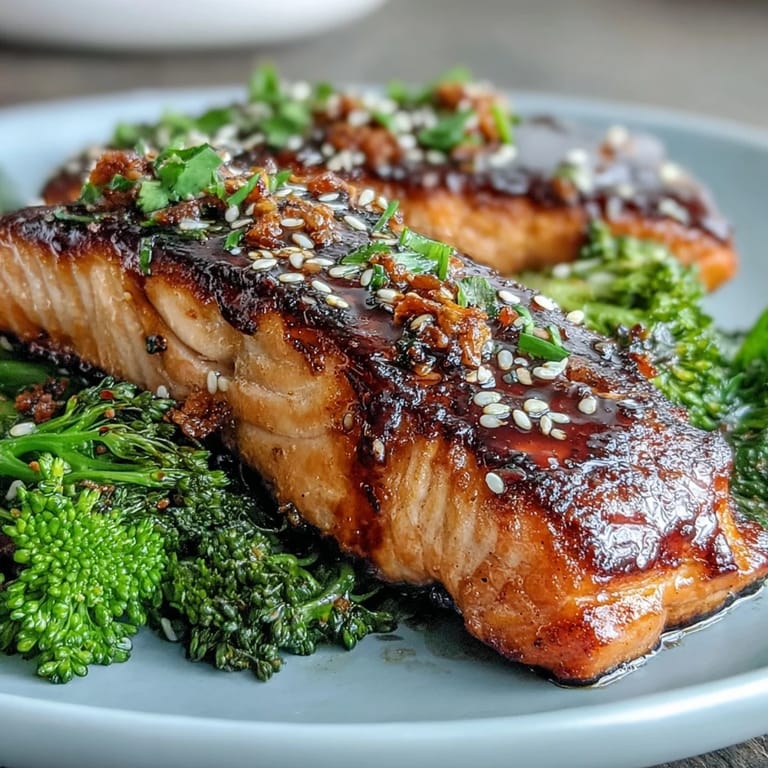
- Honey: This isn't just sweetness; it's what catches the heat and caramelizes into that burnished, glossy coating that makes the dish look done properly.
- Rice vinegar: A small splash that cuts through the richness and keeps the glaze from feeling cloying—it's the thing nobody mentions but everyone tastes.
- Sesame oil: Use the toasted kind for both the glaze and the broccoli; it has a deeper, nuttier flavor than plain sesame oil and changes the whole character of the dish.
- Fresh ginger and garlic: Minced fine so they dissolve into the glaze rather than creating bits to bite down on awkwardly.
- Broccoli florets: Cut them roughly the same size so they cook evenly and blanching them first means they finish with a gentle sauté rather than turning mushy.
- Sesame seeds (toasted): Sprinkle these on at the very end so they stay crispy; they're what catches the light and makes the plate feel finished.
Tired of Takeout? 🥡
Get 10 meals you can make faster than delivery arrives. Seriously.
One email. No spam. Unsubscribe anytime.
Instructions
- Set your oven and prepare:
- Preheat to 200°C (400°F) and line a baking sheet with parchment paper so you're ready to move quickly once the salmon starts cooking.
- Dry and season the salmon:
- Pat the fillets completely dry—moisture is the enemy of a good sear—then season both sides generously with salt and pepper, letting them sit for a minute so the seasoning adheres.
- Make the glaze:
- Whisk soy sauce, honey, rice vinegar, sesame oil, minced garlic, and grated ginger in a small bowl until the honey dissolves and everything looks unified and glossy. This is where the magic happens in five minutes.
- Sear the salmon:
- Heat olive oil in an oven-safe skillet over medium-high heat until it shimmers, then lay the salmon fillets skin-side down (if using skin-on) for 2 to 3 minutes until the underside turns golden and crispy. The sound changes when it's ready—you'll hear a slight sizzle calm down.
- Glaze and finish in the oven:
- Flip the fillets, pour the glaze over them, then transfer the skillet to the oven for 7 to 9 minutes until the salmon flakes gently with a fork and the glaze has bubbled around the edges. The internal temperature should reach about 63°C (145°F) at the thickest part.
- Blanch the broccoli:
- While the salmon finishes, bring a pot of salted water to a boil and blanch the broccoli florets for exactly 2 minutes, then drain and rinse under cold water to stop them cooking and set their bright green color.
- Finish the broccoli:
- Heat sesame oil in a large pan over medium heat, add the blanched broccoli, and sauté for 2 to 3 minutes until the florets develop light brown edges and smell nutty and warm. Sprinkle with toasted sesame seeds and salt to taste.
- Plate and serve:
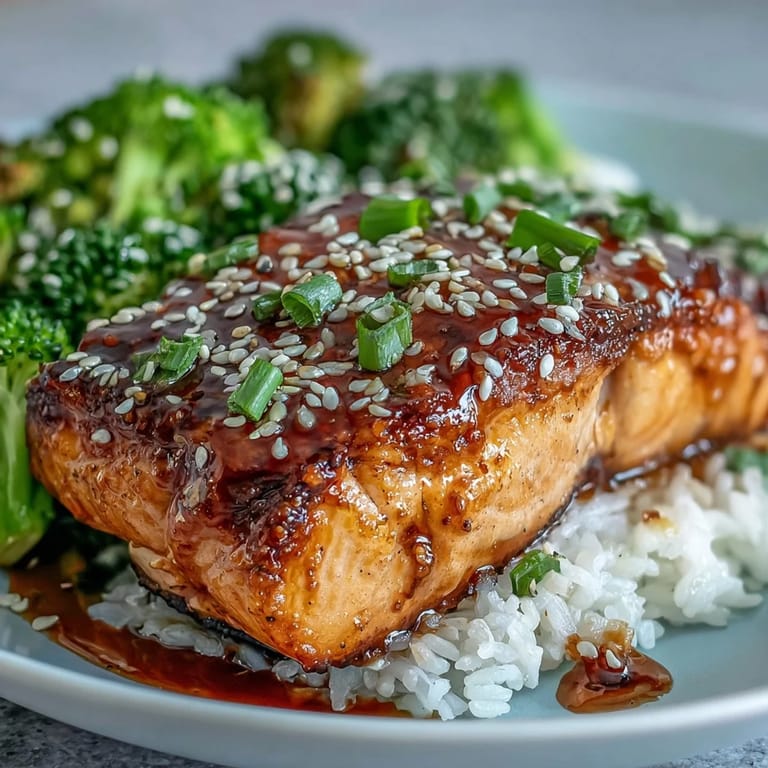
- Arrange the sesame broccoli on plates or a platter, top with the glazed salmon, and finish with sliced spring onions and lime wedges if you have them—the acidity of the lime brightens everything.
 Pin It
 There was an evening when I made this for a friend who'd just moved into her first apartment and didn't own much besides a skillet and some hope. Watching her taste it and then immediately text me asking if I'd teach her, seeing her realize that good food doesn't require a kitchen full of gadgets—that moment stuck with me. It's become the dish I recommend when someone says they're intimidated by cooking, because it proves that technique and quality ingredients matter far more than complexity.
The Alchemy of Glazing
There's a reason glazes work so well with salmon: the fish's natural oils and the caramelizing honey create this almost slick, burnished surface that catches the light and tastes both savory and sweet in the same bite. I used to think a glaze was just something you painted on at the end, but watching it bubble and reduce in the oven taught me it's actually transforming, concentrating, becoming something richer than its individual parts. The soy sauce's saltiness deepens, the honey develops these almost bitter caramel notes, and the sesame oil brings everything into focus with its toasted, warming presence.
Why Blanching Changes Everything
I learned about blanching broccoli from someone's grandmother, and it seems like a fussy extra step until you realize it's actually the secret to broccoli that tastes bright and alive rather than dull and mushy. That two-minute plunge in boiling water followed by an ice bath shock sets the color and stops the cooking completely, so when you sauté it later, you're just adding flavor and developing those crispy edges, not cooking away the life from it. It's the kind of technique that feels old-fashioned until you taste the difference and realize it's just thoughtfulness expressed as cooking.
Flexibility and Flavor Swaps
This dish has a structure sturdy enough that you can play within it without it falling apart. Some nights I've used miso paste instead of extra soy sauce, or swapped the honey for maple syrup when that's what I had open. I've served it over jasmine rice, alongside charred bok choy, over a bed of simple greens—each version feels like its own meal. The core of it—that glazed salmon, that sesame-kissed broccoli—remains satisfying and sensible no matter what you nest it beside.
- Try sriracha or red pepper flakes stirred into the glaze if you want heat creeping in alongside the sweetness.
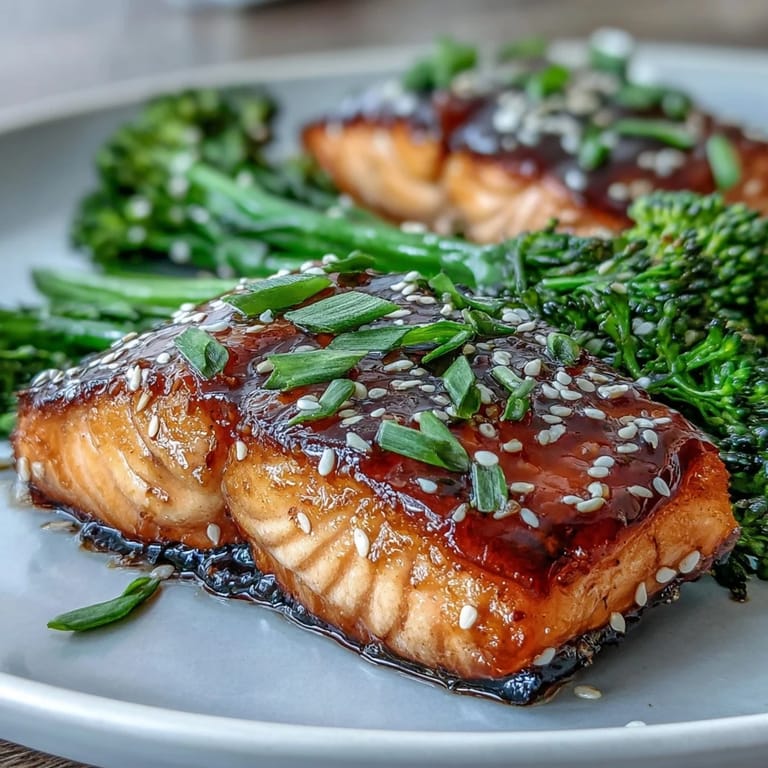
- Swap the broccoli for broccolini, green beans, or even thin asparagus if that's what your market has looking good.
- Serve with steamed jasmine rice, quinoa, or just a simple salad dressed with lime juice and a whisper of sesame oil.
 Pin It
 This is the dish I make when I want cooking to feel like care, when I want to feed someone well without losing my mind in the process. It's become the proof I offer myself that good food lives in simplicity, in taking time to do a few things properly, in letting quality salmon and sesame oil do most of the talking.
Recipe FAQs
- → What is the best way to cook the salmon for this dish?
Sear the salmon fillets skin-side down in olive oil until golden, then finish roasting with the honey-soy glaze to keep the fish moist and flavorful.
- → How do I prepare the broccoli to keep it crisp-tender?
Blanch the broccoli florets briefly in boiling water, then sauté them in sesame oil with toasted sesame seeds for added aroma and crunch.
- → Can I use other vegetables instead of broccoli?
Yes, broccolini or green beans work well as alternatives, providing similar texture and flavor when cooked with sesame oil.
- → How should the honey-soy glaze be made?
Whisk together soy sauce, honey, rice vinegar, sesame oil, minced garlic, and grated ginger for a balanced sweet and savory glaze.
- → What garnishes enhance this dish?
Sliced spring onions and lime wedges add fresh, bright notes that complement the richness of the glaze and salmon.
- → Is this dish suitable for special diets?
It fits a pescatarian and dairy-free diet, but contains fish, soy, and sesame allergens to be mindful of.