 Pin It
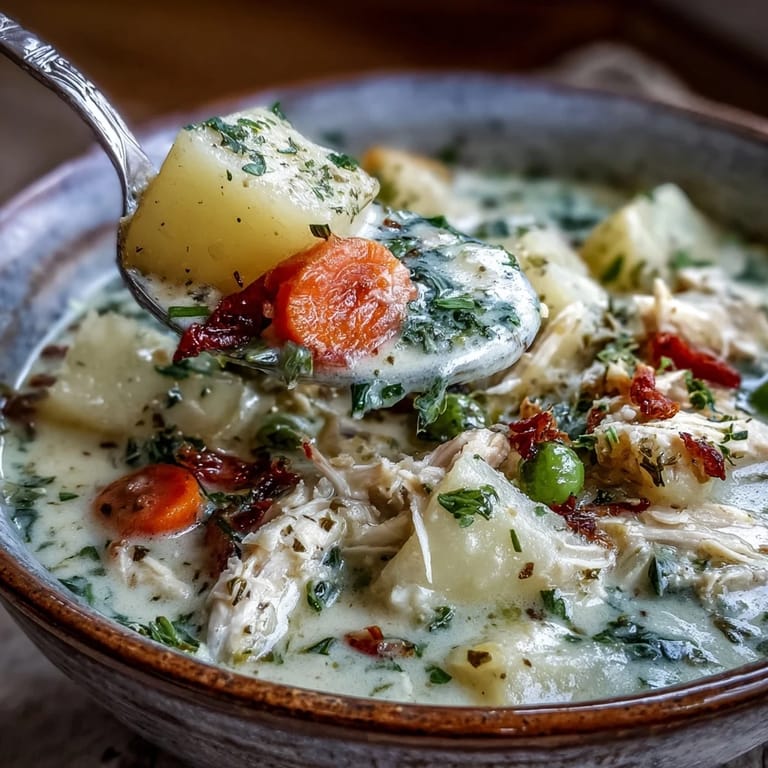
 There's something about a bowl of chicken pot pie soup that stops you mid-day and makes you pause. My neighbor handed me a container of it one January afternoon when the sky was doing that heavy-gray thing, and I remember being skeptical at first—soup instead of the actual pie seemed like a shortcut. But one spoonful changed that entirely. The creaminess, the tender chicken, those soft vegetables that had been coaxing flavor into each other for the better part of an hour—it was the dish itself, just arranged differently. Now I make it constantly, especially when I want something that feels like comfort without the fuss of pastry.
I made this for my sister's book club once, doubling the batch because I wasn't sure if six bowls would be enough. It was—barely. What I didn't expect was watching them all slow down mid-conversation, abandoning their critiques of whatever literary mystery they were discussing, just to savor another bite. She texted me the recipe request before they'd even left, and I've made it at least a dozen times since for her family alone. That's when I know a recipe has truly landed.
Ingredients
- Unsalted butter (2 tablespoons): This is your flavor foundation and the base of your roux, so good quality actually matters—I learned this the hard way with margarine once.
- Yellow onion, diced (1 medium): The sweetness builds as it softens, creating the backbone of the broth without needing extra stock or shortcuts.
- Carrots and celery (2 medium carrots, 2 stalks): These are the aromatic trio's quiet partners, adding depth and a subtle vegetal sweetness that balances the cream.
- Yukon Gold potatoes, diced (2 medium): They hold their shape better than russets and have a buttery texture that feels intentional rather than mushy—this matters.
- Frozen peas (1 cup): Fresh or thawed peas can work, but frozen actually preserves their bright pop better and you don't need to plan ahead.
- Garlic, minced (2 cloves): Mince it fine and cook it just until fragrant or it turns bitter—I once let mine go too long and had to start over.
- Shredded rotisserie chicken (3 cups): This is the real time-saver and honestly tastes fantastic because it's already seasoned and rendered; just make sure to remove any skin or bone fragments.
- All-purpose flour (1/3 cup): This creates the roux that thickens everything naturally without feeling starchy if you cook out the raw flour taste first.
- Low-sodium chicken broth (4 cups): Low-sodium matters here because the cream and salt will intensify flavors quickly—you're in control of the seasoning.
- Whole milk and heavy cream (1 cup milk, 1/2 cup cream): The combination gives you richness without being overwhelming; I've tried all cream before and it felt too much.
- Dried thyme, bay leaf, salt, and pepper: Thyme is almost mandatory for pot pie flavor, the bay leaf hides in the background adding savory notes, and tasting as you go prevents the need to rescue it later.
- Fresh parsley for garnish (2 tablespoons): This is the final touch that says someone cared—it adds brightness and color when the soup might otherwise look monochrome.
Tired of Takeout? 🥡
Get 10 meals you can make faster than delivery arrives. Seriously.
One email. No spam. Unsubscribe anytime.
Instructions
- Melt and sauté your flavor base:
- Place your Dutch oven over medium heat and let the butter pool and foam slightly, then add your diced onion along with the carrots and celery. You'll notice the kitchen starting to smell good almost immediately; sauté for about 5 to 6 minutes, stirring occasionally, until the onion turns translucent and the vegetables begin to soften at the edges.
- Bloom the garlic:
- Add your minced garlic and stir constantly for just one minute—this is crucial because garlic burns quickly and tastes acrid if you're not paying attention. You want fragrant and sweet, not charred and bitter.
- Add the potatoes and build your thickener:
- Toss in your diced Yukon Gold potatoes and let them cook for about 2 minutes, then sprinkle the flour over everything and stir well to coat all the vegetables. Cook this flour mixture for 1 to 2 minutes, stirring constantly, until the raw flour smell fades and you've got a loose, sandy paste.
- Deglaze and combine your liquids:
- Pour the chicken broth in gradually while stirring steadily, scraping the bottom of the pot with your wooden spoon to capture all those browned bits—they're pure flavor. Add the milk, thyme, bay leaf, salt, and pepper, stirring until everything is smooth and combined.
- Simmer until the potatoes are tender:
- Bring the soup to a gentle simmer, then reduce the heat to medium-low, cover partially, and let it cook for 10 to 12 minutes. You'll know it's ready when a fork slides through a potato piece without any resistance—this is the point where the soup moves from raw ingredients to something cohesive.
- Finish with chicken, peas, and cream:
- Stir in the shredded rotisserie chicken, the frozen peas, and the heavy cream, and let everything simmer uncovered for another 5 to 8 minutes until the soup thickens slightly and the peas turn bright green. The cream will begin to break down the starches from the flour, creating a naturally thickened, silky broth.
- Taste and adjust:
- Fish out the bay leaf, then taste a spoonful and decide if it needs more salt, pepper, or anything else. This is your moment to make it yours.
- Serve with intention:
- Ladle the soup into bowls, garnish each with fresh parsley, and serve while it's still steaming—the warmth matters as much as the flavor does.
 Pin It
 My daughter came home from school complaining about a headache and generally feeling like the world wasn't worth her effort, so I made this while she did her homework. By the time she smelled it simmering, she was stretched out at the kitchen table with her homework forgotten, asking questions about why the potatoes got soft, why we needed the cream, how long before we could eat. That's when I realized this soup isn't just about feeding someone—it's about the conversation that happens while you're making it, the way a kitchen can pull someone out of a bad day without trying too hard.
Why Rotisserie Chicken Changes Everything
Rotisserie chicken is one of those grocery store shortcuts that actually elevates a dish rather than diminishing it. The birds are already seasoned and the skin renders fat into the meat during cooking, which means when you shred it, you're getting flavor-forward meat instead of something bland that needs rescuing. I've made this soup with homemade poached chicken before, and while it works fine, it requires an extra step and honestly tastes less interesting because there's no built-in seasoning base. The rotisserie version lets you focus on building the broth itself rather than worrying about whether the protein is interesting enough, and that's a trade I'll take every single time.
The Roux Matters More Than You Think
There's a reason traditional French cooking teaches roux as foundational—it's genuinely transformative. When you melt butter and whisk in flour, the flour's starches gelatinize and trap liquid particles, creating that silky texture that makes the soup feel luxurious instead of thin or watery. The common mistake is either not cooking it long enough so you taste raw flour in the finished soup, or cooking it too long and getting a darker roux that changes the flavor profile you're aiming for. For this pot pie soup, you want a light roux that's just cooked through—about 90 seconds of gentle stirring, and you'll see the mixture move from floury to almost sandy-looking, and that's your signal to add the broth.
Storage, Reheating, and Variations
This soup actually tastes even better the next day because the flavors continue melding overnight, so don't hesitate to make a full batch even if you're only feeding a few people. Store it in an airtight container in the refrigerator for up to four days, or freeze it in portions for up to three months—just know that frozen soup may separate slightly when thawed, but a quick stir over low heat brings everything back together beautifully. When reheating, use low heat so the cream doesn't break, and add a splash of milk or broth if it's thickened too much during storage.
- For extra indulgence, stir in a handful of sharp cheddar cheese or a splash of extra cream right before serving.
- Turkey works as a direct substitute for chicken, or use cooked ham for an entirely different flavor direction.
- Serve it alongside warm biscuits, crusty bread, or even puff pastry to lean into the pot pie theme without actually making pie.
 Pin It
 This soup has become my go-to for the moments when someone needs feeding and comfort simultaneously. It's the kind of dish that doesn't demand much from you but gives back abundantly in return.
Recipe FAQs
- → Can I use raw chicken instead of rotisserie?
Yes, you can use raw chicken breasts or thighs. Season and cook them in the pot first until cooked through, then remove and shred before adding back in step 7. This will add about 10-15 minutes to your prep time.
- → How do I store leftovers?
Store cooled soup in an airtight container in the refrigerator for 3-4 days. The broth will thicken as it sits - simply thin with a splash of chicken broth or milk when reheating. Freeze for up to 3 months, though the potatoes may become slightly softer.
- → Can I make this gluten-free?
Absolutely. Substitute the all-purpose flour with a 1:1 gluten-free flour blend or cornstarch slurry. Ensure your chicken broth is certified gluten-free, as some brands contain gluten-based flavorings or thickeners.
- → What vegetables work best in this soup?
Yukon Gold potatoes hold their shape well and become creamy without falling apart. Carrots, celery, onions, and peas are classic choices. You can also add green beans, corn, or parsnips depending on what's in season.
- → How can I make the soup thicker?
For an extra thick soup, mash some of the potatoes against the side of the pot during step 6. You can also increase the flour to 1/2 cup, or stir in a slurry of cornstarch and cold water during the final simmering stage.