 Pin It
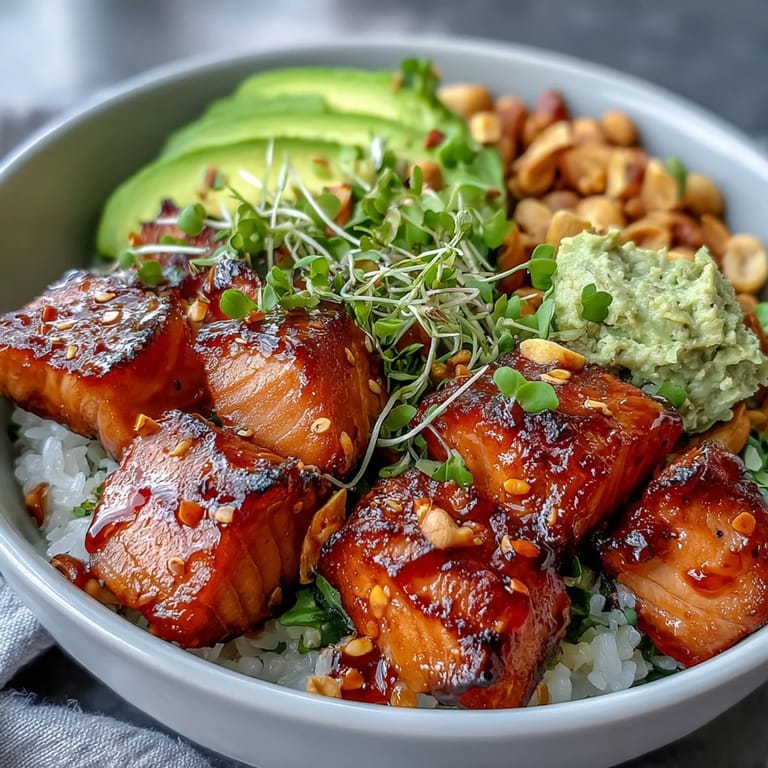
 I discovered this bowl on a Tuesday afternoon when my fridge had exactly three things: leftover sushi rice, a beautiful salmon fillet, and an avocado that was at that perfect moment of ripeness. Instead of ordering takeout like usual, I decided to play around with what I had, layering flavors until something clicked. That first bite, with the creamy avocado meeting the umami-rich salmon and that unexpected kick of chili oil, felt like a small culinary win. Now it's become my go-to when I want something that tastes restaurant-quality but comes together faster than any delivery would arrive.
My sister visited last month and was skeptical about the whole wasabi-chili oil combination until she tried it. Watching her eyes widen as the flavors hit was worth every minute of prep, and she actually asked for the recipe before leaving. Since then, she's made it three times and keeps texting me photos of her variations.
Ingredients
- Fresh salmon fillet, 250 g, skinless and cubed: Look for salmon that smells like the ocean, not fishy, and has a firm texture that springs back when you press it.
- Tamari sauce, 2 tbsp: This is your umami backbone, and using tamari instead of regular soy sauce keeps things gluten-free if that matters to you.
- Toasted sesame oil, 1 tsp: A little goes a long way here—it's potent and aromatic, so resist the urge to add more than the recipe calls for.
- Rice vinegar, 2 tsp total (1 tsp for marinade, 1 tbsp for rice): This brightens everything without being harsh, and it's a kitchen staple worth keeping on hand.
- Honey or agave syrup, 1 tsp: Just enough sweetness to balance the saltiness and add depth to the marinade.
- Cooked sushi rice, 200 g (about 1 cup uncooked): The short-grain texture matters here—it holds up better to the wet toppings than long-grain rice would.
- Sugar and salt for rice seasoning: These modest amounts transform plain rice into something with actual flavor that supports, not competes with, the toppings.
- Ripe avocado, 1 large: Choose one that yields slightly to gentle pressure; too hard and it won't slice cleanly, too soft and it falls apart.
- Roasted peanuts, 2 tbsp, roughly chopped: Roasting brings out their nuttiness, and chopping them coarsely means they stay crunchy rather than turning to paste.
- Chili oil, 1 tbsp: Start with less if you're sensitive to heat—you can always drizzle more at the table.
- Wasabi paste, 1 tsp: Fresh wasabi is incredible if you can find it, but the tube version works just fine for most home kitchens.
- Nori strips, from 1 sheet: These add a briny, oceanic note that ties the whole thing together beautifully.
- Cucumber, 1 small, thinly sliced: The fresh crunch balances the richness of the avocado and salmon.
- Spring onions, 2, sliced: Their sharpness cuts through the heavier flavors and adds a welcome brightness.
- Toasted sesame seeds, 1 tbsp: Toast them yourself if you have time—the difference in flavor is noticeable.
- Fresh cilantro or microgreens for garnish: This is optional but recommended; it adds visual appeal and a fresh, herbal finish.
- Lime wedges: A squeeze just before eating lifts all the flavors and ties everything together.
Tired of Takeout? 🥡
Get 10 meals you can make faster than delivery arrives. Seriously.
One email. No spam. Unsubscribe anytime.
Instructions
- Build your marinade:
- Whisk together the tamari, sesame oil, rice vinegar, and honey in a medium bowl until the honey dissolves completely. This mixture should smell complex and savory, not one-dimensional.
- Marinate the salmon:
- Add your salmon cubes to the marinade and toss gently so each piece gets coated. Cover and refrigerate for 10–15 minutes; this time lets the flavors sink in without overcooking the delicate fish.
- Season your rice:
- In a separate bowl, mix your warm cooked sushi rice with the rice vinegar, sugar, and salt until everything is evenly distributed. Taste it—the rice should taste subtly seasoned, not boring, but not so salty that it overpowers the toppings.
- Prep your toppings:
- Slice the avocado lengthwise around the pit, twist the halves apart, and scoop the flesh onto a cutting board for clean slicing. While you're at it, chop your peanuts, slice the cucumber and spring onions, and cut your nori into thin strips so everything is ready when you need it.
- Assemble the first layer:
- Divide your seasoned rice between two serving bowls, pressing it down gently so it forms a base that won't shift when you add the wet toppings. A warm bowl makes a difference here—the heat keeps the rice at its best temperature while you finish building.
- Add protein and fresh elements:
- Arrange the marinated salmon over the rice, then layer on the avocado slices, cucumber, and spring onions in a way that looks intentional but not fussy. Spacing things out means every spoonful gets a bit of everything.
- Bring the heat and funk:
- Drizzle the chili oil across the bowl and dot small amounts of wasabi paste in strategic spots. This gives you control—people can mix it all together or dab wasabi only when they want that sharp hit.
- Final flourishes:
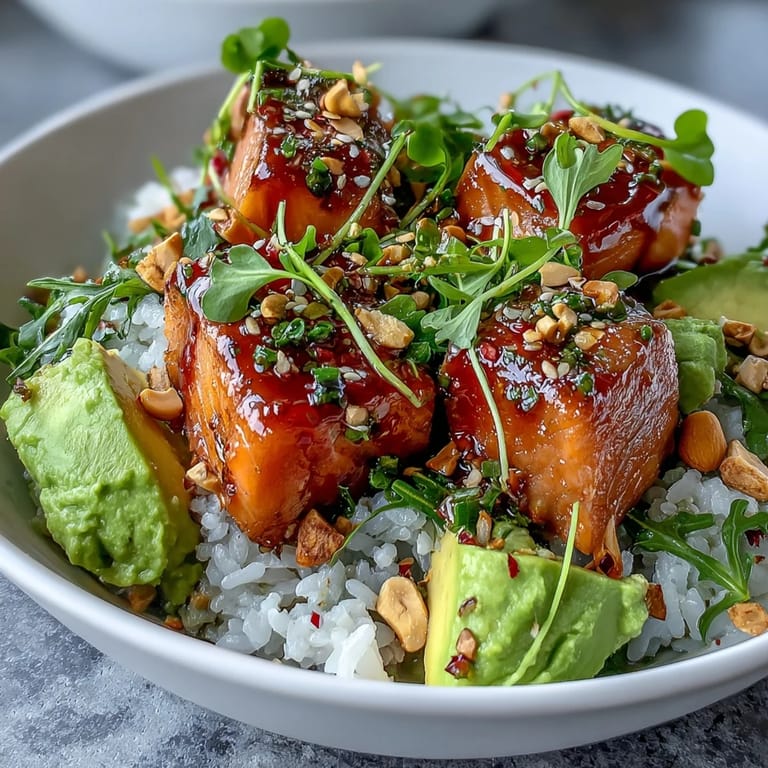
- Sprinkle the peanuts, sesame seeds, and nori strips over the top so they stay crispy and visible. A handful of cilantro or microgreens and a lime wedge on the side complete the picture.
 Pin It
 Last week, I made this for someone who said they didn't usually like fish, and they ate every single bite without hesitation. Watching skepticism turn into genuine enjoyment—that's when I realized this isn't just a bowl of ingredients, it's a small act of hospitality that somehow works on everyone.
The Wasabi and Chili Oil Balance
The heat profile here is deliberately mild, which means you're in charge. If you love spice, wasabi and chili oil are your playground—they're two different kinds of heat, so layering them creates complexity instead of just burning. The wasabi is sharp and sinus-clearing, while chili oil is warm and lingering, and together they don't fight each other. I learned this by accident when I went too heavy on both once and couldn't taste anything else, so now I'm a believer in restraint until someone at the table asks for more.
Why This Works as Meal Prep
You can prep almost everything ahead of time—season your rice, marinate your salmon, chop your vegetables—and then assemble the bowls fresh just before eating. The only thing that suffers from sitting is the avocado and the peanuts, which lose their crunch, so add those last. This makes it perfect for the kind of week where you want restaurant-quality food but can't spend an hour cooking when dinner time arrives.
Customizing Without Losing the Soul
The beauty of a bowl is that you can adapt it to who's eating without losing what makes it work. Swap the salmon for marinated tofu if you're cooking vegetarian, use cashews instead of peanuts for someone with allergies, or add pickled ginger if you want an extra layer of flavor. The marinade, the seasoned rice, and the balance of textures—those are the non-negotiables that keep it feeling intentional rather than thrown together.
- Pickled ginger adds a floral, slightly sweet sharpness that plays beautifully with the wasabi.
- Edamame brings protein and a fun pop of texture if you're leaning toward vegetarian.
- A drizzle of extra sesame oil right before eating elevates everything without making it heavy.
 Pin It
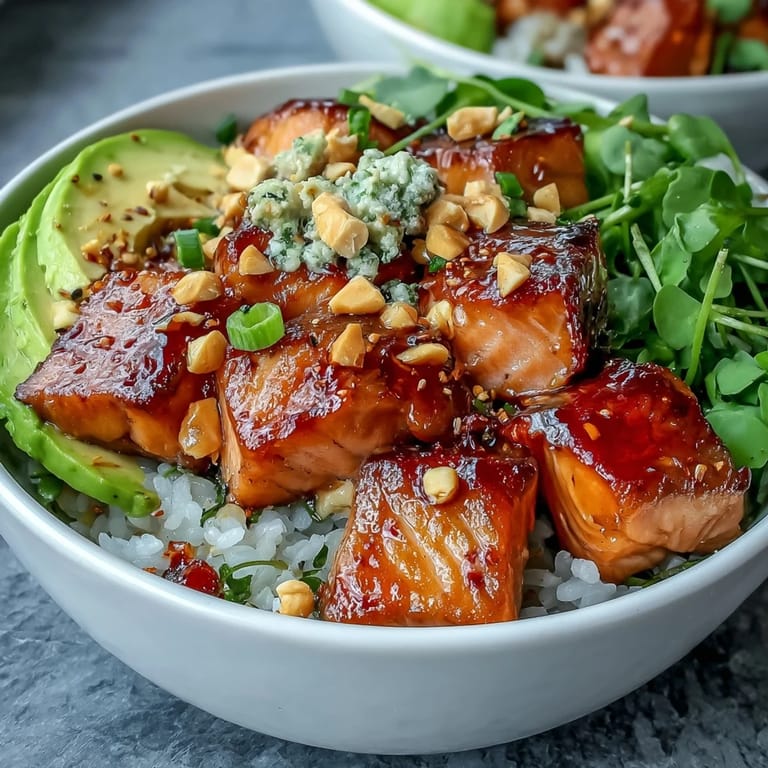
 This bowl has become the dish I reach for when I want to feel like I'm taking care of myself, or when I want to impress someone without fussing. It's proof that simple ingredients, when combined with intention, can feel like so much more.
Recipe FAQs
- → Can I use other fish instead of salmon?
Tuna works beautifully as a substitute—look for sushi-grade if serving raw or lightly marinated. For cooked alternatives, try seared yellowtail or even cooked shrimp. The marinade and flavors complement most fatty fish varieties well.
- → How do I make this vegetarian?
Replace salmon with marinated tofu cubes or tempeh. Press the tofu first for better texture absorption, then marinate for at least 20 minutes. You might also add edamame for additional protein to maintain nutritional balance.
- → Can I prepare components ahead?
Absolutely. The rice can be cooked and seasoned up to 2 days ahead—store in the refrigerator and reheat before serving. Toppings can be prepped the night before, though slice avocado just before assembling to prevent browning. Keep the salmon fresh and marinate immediately before cooking for best results.
- → What rice works best?
Short-grain sushi rice is traditional for its sticky texture that holds toppings well. Brown sushi rice adds nutty flavor and fiber. In a pinch, jasmine rice offers fragrant aroma but is less sticky. Avoid long-grain varieties as they don't bind ingredients together effectively.
- → How can I adjust the spice level?
Start with half the wasabi and chili oil, then add more gradually to taste. The heat builds as ingredients meld. For milder bowls, swap chili oil for sesame oil and wasabi for pickled ginger. Conversely, add sliced fresh chili or sriracha for extra kick if you love heat.