 Pin It
 There's something about the moment you crack open a passionfruit that stops time—that moment when the tropical scent hits and you realize you're about to make something genuinely special. I stumbled into this tart recipe during a dinner party where someone brought a bag of passionfruit from their garden, and instead of serving them simply, I found myself building layers of buttery pastry, silky curd, and clouds of meringue. It's become my go-to dessert when I want to impress without spending all day in the kitchen.
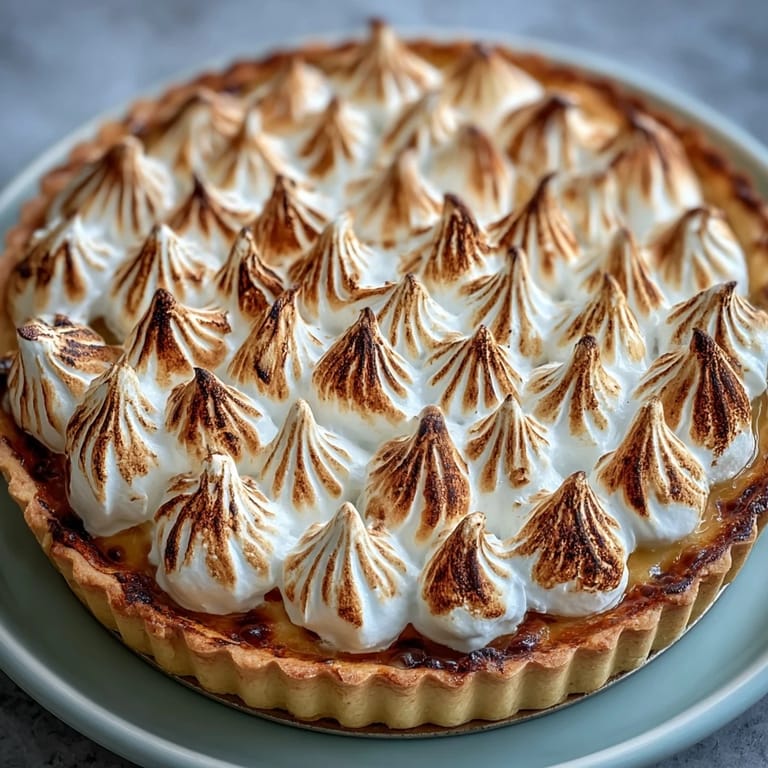
I'll never forget pulling this tart from the oven at my sister's birthday dinner, torch in hand, carefully browning those meringue peaks while everyone crowded around the kitchen counter. The kitchen smelled like caramelized sugar and tropical fruit, and when I sliced into it twenty minutes later, the curd held its golden color perfectly—that's when I knew this was the dessert I'd make again and again.
Ingredients
- All-purpose flour (1 1/4 cups): The foundation of a crisp, tender crust; keep it cold and work quickly so the butter stays in distinct pockets.
- Granulated sugar (3/4 cup total for crust and curd): Adds sweetness and helps the pastry turn golden during baking.
- Salt (1/2 tsp plus pinch): Balances the tropical tang and enhances every flavor layer.
- Unsalted butter, cold and cubed (1/2 cup plus 1/4 cup): Cold butter creates flakiness; the second batch enriches the curd to silky perfection.
- Egg yolk (1 large): Binds the pastry dough without making it tough.
- Ice water (2–3 tbsp): Just enough to bring the dough together; add slowly and resist over-mixing.
- Passionfruit pulp (1/2 cup): The star ingredient—fresh or frozen works equally well, but strain out the seeds unless you want texture.
- Eggs and egg yolks (2 large eggs plus 2 yolks): Create the velvety curd texture through gentle cooking.
- Lemon juice (1 tbsp): Brightens the passionfruit and prevents the curd from tasting one-dimensional.
- Egg whites (3 large, room temperature): Room temperature eggs whip into stronger peaks than cold ones.
- Cream of tartar (1/4 tsp): Stabilizes the meringue so it holds its shape and doesn't weep.
- Vanilla extract (1/2 tsp): A subtle backdrop that lets the passionfruit shine.
Tired of Takeout? 🥡
Get 10 meals you can make faster than delivery arrives. Seriously.
One email. No spam. Unsubscribe anytime.
Instructions
- Heat your oven and prep the pan:
- Set the oven to 350°F and lightly grease your 9-inch tart pan; this matters more than you'd think because it prevents the pastry from sticking.
- Build your pastry dough:
- Combine flour, sugar, and salt, then work in the cold butter until it looks like coarse breadcrumbs—this step sets up the flakiness. Add the egg yolk and ice water just until the dough comes together, being careful not to overwork it.
- Shape and chill the crust:
- Press the dough into your pan, trim the edges, and chill for 15 minutes; this resting period helps prevent shrinking during baking.
- Blind bake for structure:
- Line the crust with parchment, fill with pie weights or dried beans, and bake for 15 minutes. Remove the weights, bake another 8–10 minutes until golden, then let it cool completely so it's crisp when you add the curd.
- Cook the passionfruit curd:
- Whisk together the passionfruit pulp, sugar, eggs, egg yolks, lemon juice, and salt in a saucepan, then cook over medium-low heat while stirring constantly. You'll feel it transform from loose liquid to silky sauce around the 8-minute mark when it coats the back of a spoon.
- Smooth the curd and chill:
- Remove from heat and whisk in the butter until completely smooth, then pour into your cooled crust and refrigerate for at least an hour so it sets firm enough for clean slices.
- Whip the meringue:
- In a clean, dry bowl, beat the room-temperature egg whites and cream of tartar until soft peaks form, then gradually add sugar while beating until you have stiff, glossy peaks. Finish with vanilla extract.
- Top and torch the tart:
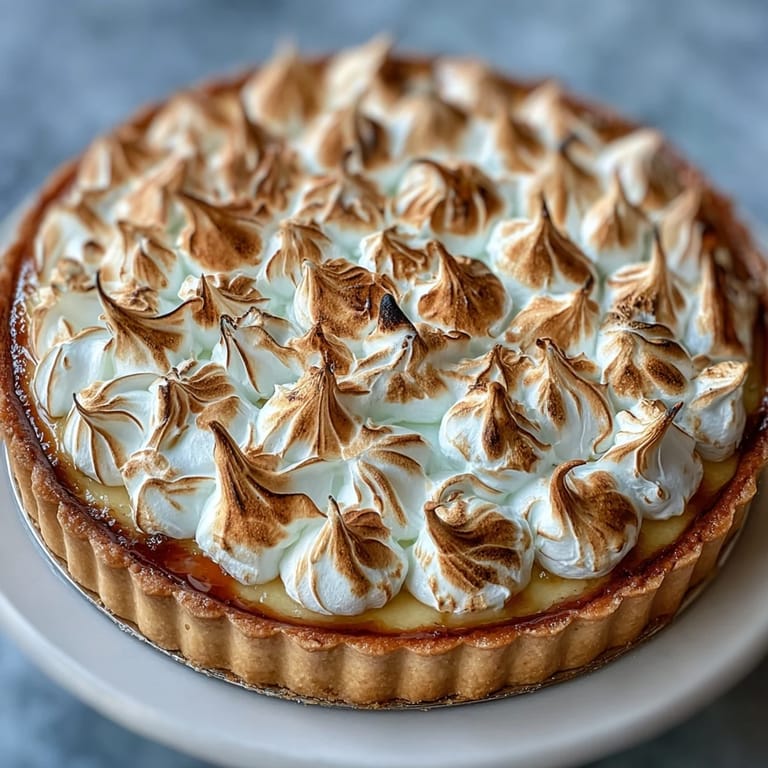
- Spread or pipe the meringue decoratively over the chilled curd, then use a kitchen torch or your broiler to brown the peaks for 1–2 minutes. Watch it closely because meringue browns faster than you'd expect.
- Final chill before serving:
- Refrigerate the finished tart for 30 minutes so the slices stay clean and defined when you cut into them.
 Pin It
 There was a moment during that first dinner party when a guest took her first bite, closed her eyes, and smiled—that's when I understood why this tart works. It's not just the flavors; it's the way each component does exactly what it's supposed to do, creating something that feels like a celebration in three textures.
Mastering the Pastry Shell
The secret to a truly crisp pastry isn't complicated—it's all about keeping everything cold and working quickly. I learned this the hard way after making a soggy crust my first time around, then realized I'd been warming the butter with my hands. Now I cube the butter straight from the fridge, use ice water, and even chill my mixing bowl. That 15-minute rest before baking matters too; it gives the gluten time to relax so the dough shrinks less in the oven.
The Curd That Changed Everything
Making curd feels like cooking over a gentle fire—you're building something delicate and rich at the same time. The moment you whisk in that final butter, the whole mixture transforms into something silky and luxurious that barely resembles what you started with. I used to overthink the temperature, but the real test is that spoon; when the curd coats the back of a spoon thick enough that you can draw a line through it, you're done. Overcooking scrambles the eggs, undercooking leaves it runny, so standing there whisking and paying attention is worth it.
Meringue Magic and Browning Tricks
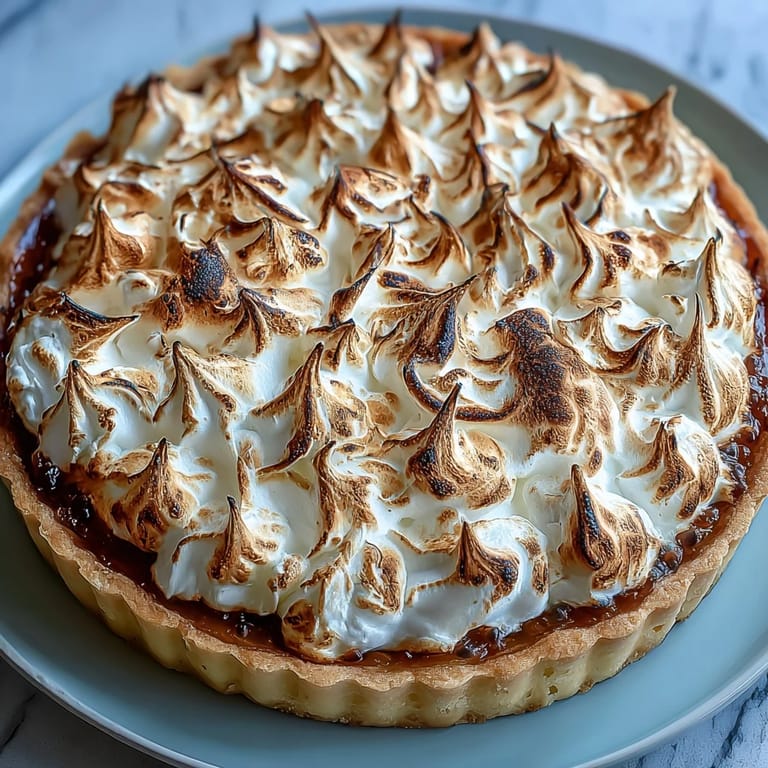
Meringue has a reputation for being temperamental, but that's often because people rush it or use wet equipment. I start with a completely clean, dry bowl—any grease or yolk will prevent the whites from whipping properly. The transformation from foamy to soft peaks to stiff, glossy peaks takes maybe five minutes with an electric mixer, and watching it happen never gets old. Browning the top is where the drama happens; I prefer a kitchen torch because it gives you control, but a quick spin under the broiler works too if you watch it like a hawk.
- Always use room-temperature egg whites because they whip faster and higher than cold ones.
- A tiny pinch of cream of tartar stabilizes the meringue so it doesn't collapse or weep liquid over time.
- Brown the meringue just before serving so it's still crispy on top rather than sitting and softening from the warm curd below.
 Pin It
 This tart reminds me that dessert doesn't have to be complicated to be memorable—it just has to be made with attention and a little bit of care. Slice into it, watch people's faces light up at the layers, and know you've created something worth savoring.
Recipe FAQs
- → How do I make the pastry shell tender and flaky?
Use cold butter cut into the flour and avoid overworking the dough. Chilling the dough before baking helps maintain structure.
- → What’s the best way to thicken the passionfruit curd?
Cook the curd over medium-low heat, whisking constantly until it coats the back of a spoon to ensure smooth thickening.
- → How can I achieve stiff meringue peaks?
Beat egg whites with cream of tartar until soft peaks form, then gradually add sugar while continuing to whip until stiff, glossy peaks appear.
- → Can I use a kitchen torch to brown the meringue?
Yes, a kitchen torch allows precise browning. Alternatively, place under a broiler briefly, watching carefully to avoid burning.
- → How long should the tart chill before serving?
Chill the curd-filled shell for at least 1 hour to set, then after adding meringue, chill another 30 minutes for clean slices.