 Pin It
 My neighbor knocked on the door one April evening with a bunch of fresh asparagus from her garden, and I suddenly remembered why spring cooking feels different—lighter, brighter, full of possibility. That night, I paired it with salmon and a simple garlic butter sauce, and what emerged from the oven was so effortlessly elegant that I've made it dozens of times since. The beauty of this dish is how it looks more complicated than it actually is, which makes it perfect for impressing people without spending hours in the kitchen. There's something about roasting salmon and asparagus together that lets them amplify each other's flavors rather than compete.
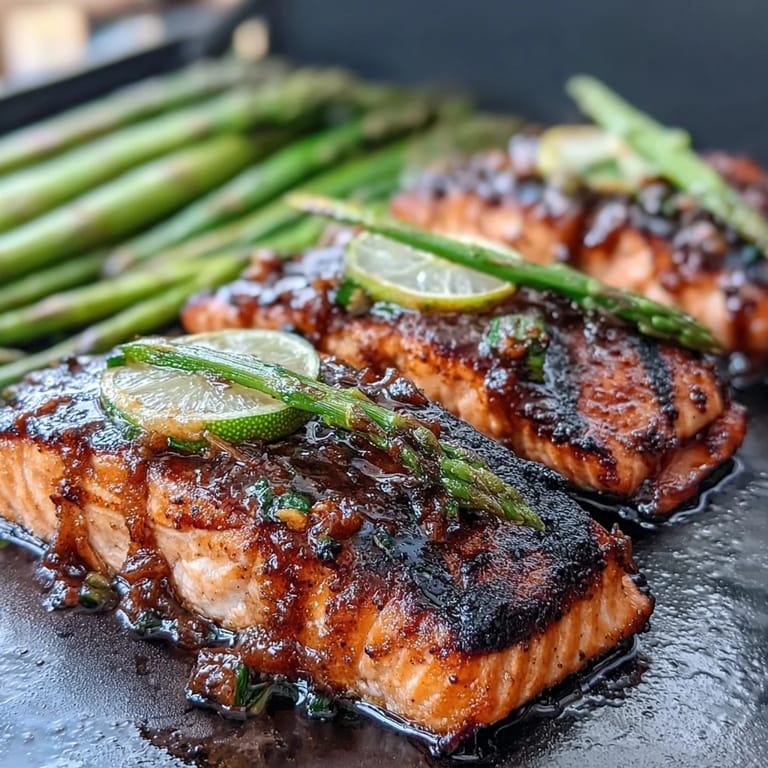
I made this for my in-laws' first visit to our new house, and I watched my usually reserved father-in-law close his eyes on the first bite—that moment of quiet appreciation told me everything. The lemon rounds nestled between the salmon and asparagus created these little pockets of brightness, and the roasting brought out a sweetness in the garlic butter that no one expected. It became our go-to when we wanted to show off without showing off, if that makes sense.
Ingredients
- Salmon fillets (4, about 6 oz each): Look for fillets with a firm texture and vibrant color; the skin-on varieties hold together beautifully during roasting and create a protective barrier that keeps the flesh moist.
- Fresh asparagus (1 lb): Snap off the woody ends by bending each spear gently until it breaks naturally—this simple motion removes exactly the tough part you don't want to eat.
- Lemon: Fresh lemon is non-negotiable here; one whole lemon gives you both slices for roasting and juice for the sauce, tying the whole dish together with acidity and brightness.
- Unsalted butter (4 tbsp): Melting it gently prevents it from browning too quickly and gives the sauce a silky, luxurious texture that coats everything evenly.
- Garlic (3 cloves): Mince it finely so it distributes throughout the butter rather than sitting in chunks; the roasting process mellows its sharpness into something sweet and savory.
- Dijon mustard (1 tsp): This adds a subtle tang and helps emulsify the sauce, creating a cohesive coating rather than separated butter pools.
- Salt, pepper, and red pepper flakes: These are your seasoning backbone; the red pepper flakes add warmth without heat if you're cooking for people who prefer milder flavors.
- Fresh parsley (2 tbsp): A finishing touch that adds color and a bright herbaceous note, though it's optional if you prefer to taste the pure garlic butter and lemon.
Tired of Takeout? 🥡
Get 10 meals you can make faster than delivery arrives. Seriously.
One email. No spam. Unsubscribe anytime.
Instructions
- Set your oven and prep your stage:
- Preheat to 400°F and line your baking sheet with parchment paper or foil—this prevents sticking and makes cleanup effortless. Think of this moment as giving yourself permission to relax once the cooking actually starts.
- Arrange your proteins and vegetables:
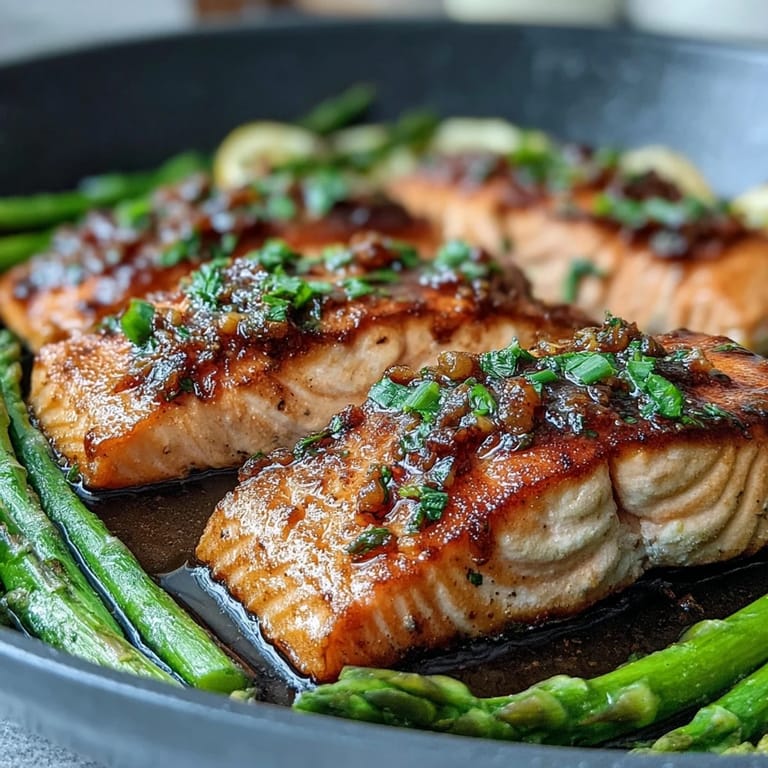
- Place salmon fillets in the center, leaving room for asparagus spears around them in a single layer, then tuck lemon slices into the gaps like you're composing a painting. This arrangement ensures everything roasts evenly and looks intentional when it hits the table.
- Build your garlic butter sauce:
- Whisk together melted butter, minced garlic, lemon juice, Dijon mustard, salt, pepper, and red pepper flakes in a small bowl until the mixture is fragrant and well combined. The mustard will prevent the butter from separating, keeping your sauce glossy and elegant.
- Coat everything generously:
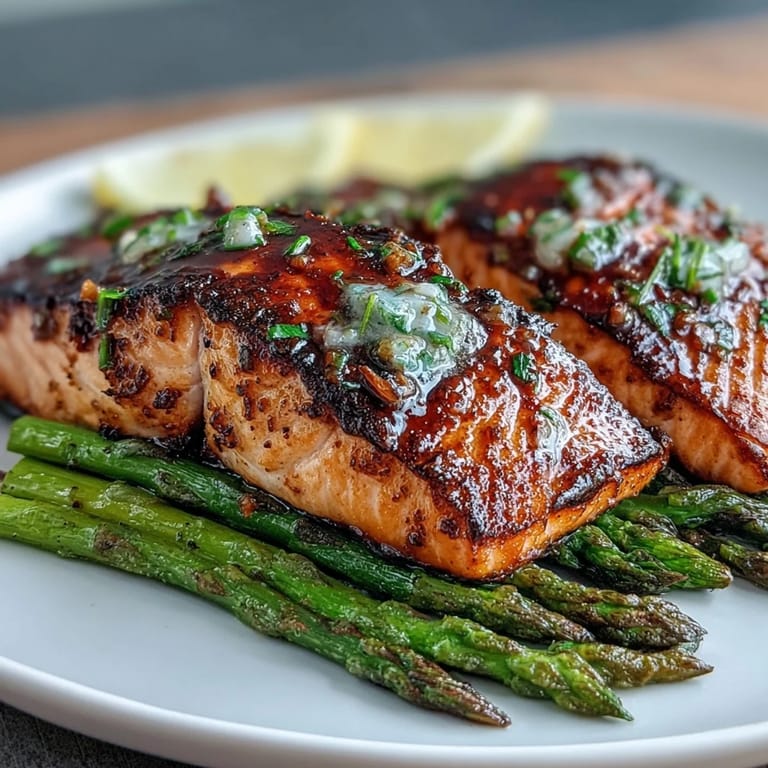
- Drizzle the garlic butter sauce evenly over the salmon and asparagus, making sure the garlic pieces distribute so every bite gets those little pockets of flavor. Don't be shy here—the sauce is what makes this dish sing.
- Roast until done:
- Slide into the oven for 15 to 18 minutes, watching for the moment when salmon flakes easily with a fork and asparagus tips turn just slightly golden at the edges. The residual heat keeps cooking for a minute after you pull it out, so pull it when it's barely done rather than waiting for it to look completely cooked.
- Finish and serve:
- Scatter parsley over the top if using, arrange everything on a platter, and serve immediately while the butter is still glossy. Lemon wedges on the side let people adjust the brightness to their taste.
 Pin It
 There was an evening when my daughter, who usually pushes away anything with visible garlic, asked for seconds and actually ate the asparagus without complaint. That's when I realized this dish had become more than just dinner—it was somehow making everyone at the table feel a little more present, a little more willing to try things.
Why This Method Works So Well
Roasting everything on one sheet means the salmon fat drips down onto the asparagus, seasoning it naturally while the lemon slices perfume the entire baking sheet. The high heat caramelizes the edges just enough to create texture without drying anything out, and the butter-based sauce glazes everything in a way that feels indulgent but stays light. There's no flipping, no babysitting, no second pans—just one motion from countertop to table.
Timing and Temperature Secrets
The 400°F temperature is the sweet spot where salmon cooks gently inside while the exterior develops a slight golden finish, and asparagus becomes tender without turning gray or mushy. Most salmon fillets of standard thickness finish in exactly 16 to 17 minutes, so if your fillets are thinner, check at 13 minutes; if they're unusually thick, let them go the full 18. The lemon slices soften into the sauce as everything roasts, releasing their juice gradually rather than all at once, which deepens the flavor continuously.
Serving Suggestions and Pairings
Plate this alongside something starchy to soak up the garlic butter sauce—creamy risotto, buttered rice, or crusty bread all work beautifully. The brightness of the lemon and the richness of the butter mean this dish doesn't need much else, though a simple green salad with a light vinaigrette cuts through nicely. If you're serving wine, a crisp white like Sauvignon Blanc or Pinot Grigio echoes the lemon notes and complements the salmon without overwhelming it.
- Save the pan drippings and toss them with pasta or spoon them over potatoes for a simple side that feels gourmet.
- Double the garlic butter sauce if you want extra to drizzle at the table—people always want more.
- Cook everything in a cast iron skillet if you want the edges slightly more caramelized and the presentation even more dramatic.
 Pin It
 This dish has become my answer when someone asks what I like to cook, because it captures everything I love about cooking—it's simple enough to feel spontaneous but beautiful enough to feel special. Every time I make it, someone says they didn't know they could cook something this elegant at home.
Recipe FAQs
- → What type of salmon is best for this dish?
Fresh salmon fillets, either skin-on or skinless, work well and stay moist when roasted.
- → Can I substitute asparagus with other vegetables?
Yes, green beans or broccolini are great alternatives and roast nicely with the salmon.
- → How do I prevent the salmon from drying out?
Roast at 400°F and monitor cooking time closely; the garlic butter sauce helps keep the salmon moist.
- → Is it necessary to use fresh lemon slices?
Fresh lemon adds brightness and moisture; its acidity enhances the flavors during roasting.
- → Can I prepare the garlic butter sauce in advance?
Yes, combining the ingredients beforehand saves time and intensifies the flavor when drizzled over the dish.